


Figure 2. AMPK regulation of the mTOR pathway and control of cell growth and autophagy.
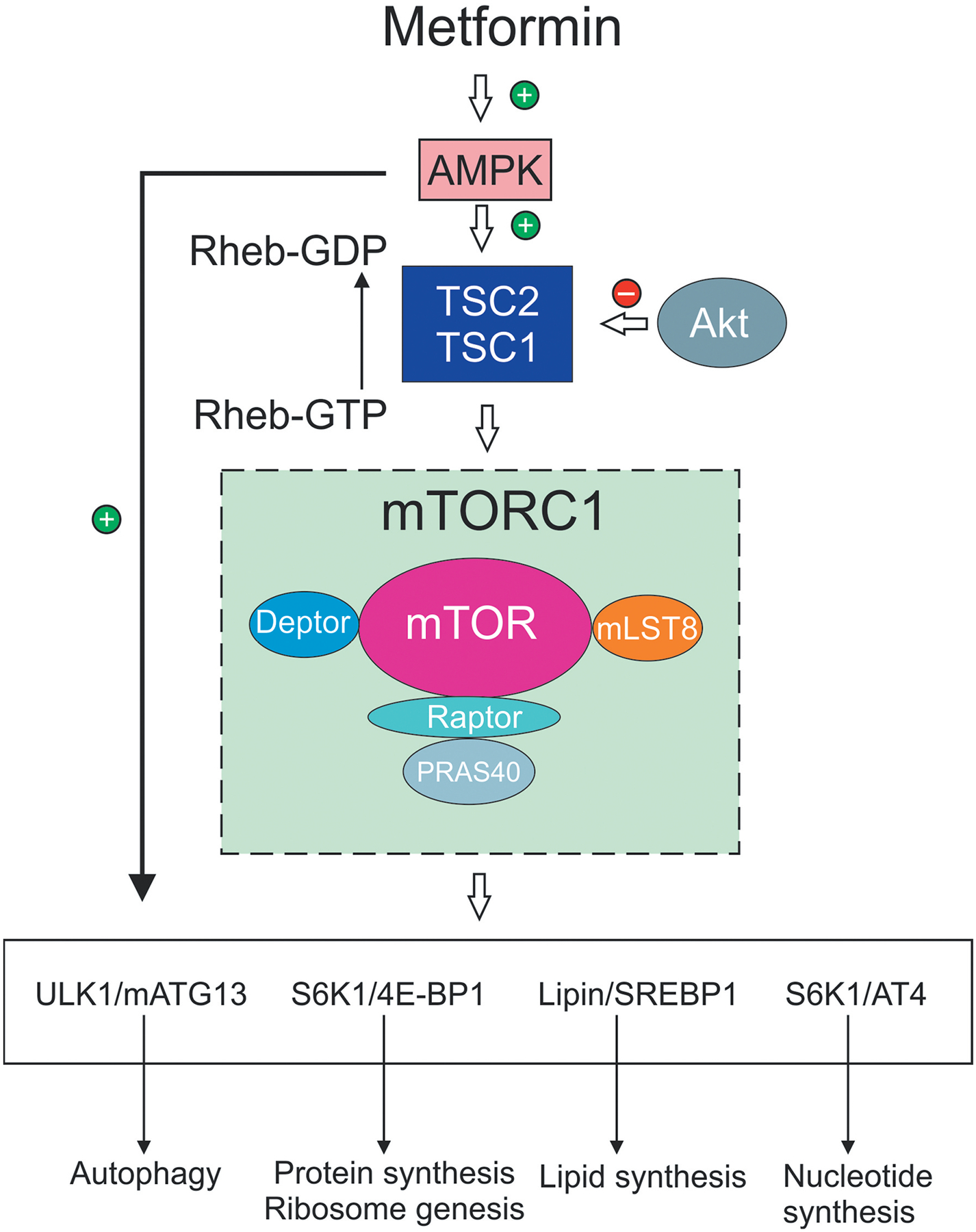
AMPK and signaling via PI 3-K/Akt, for example by growth factors, act as antagonistic modulators of the mTOR pathway to control cell phenotype. AMPK activates the TSC1/TSC2 complex to drive conversion of Rheb-GTP, an activator of the mTORC1 complex, to Rheb-GDF. This conversion effectively inhibits mTORC1 complex activity (which includes mTOR and associated proteins) and thus suppresses mTOR pathway function. Akt is inhibitory to TSC1/TSC2 thus suppressing formation of Rheb-GDP and enhancing mTORC1 activation. The mTOR pathway when active drives protein synthesis (including ribosome biogenesis), nucleotide and lipid synthesis. mTOR activation is a negative regulator of autophagy and acts antagonistically to AMPK, which also acts as a direct activator of autophagy. The mobilization of these anabolic pathways augmented cell growth and proliferation under conditions of sufficient energy and metabolite supply. AMPK activation, via detection of lowered energy and metabolite supply, suppresses these activities toward a more catabolic phenotype. Abbreviations: 4E-BP1, translation initiation factor 4E-binding protein 1; Akt, protein kinase B; AT4, activating transcription factor 4; ATG13, autophagy-related protein 13; mTOR, mammalian target of rapamycin; mTORC1, mTOR complex 1; PI 3-K, phosphoinositide 3-kinase; Rheb, Ras homolog enriched in brain; S6K1, ribosomal protein S6 kinase 1; TSC1 and 2, tuberous sclerosis 1 and 2; ULK1, Unc-51-like autophagy activating kinase 1.