


Figure 3. Epigenetic drivers potentiate tumour development in murine models.
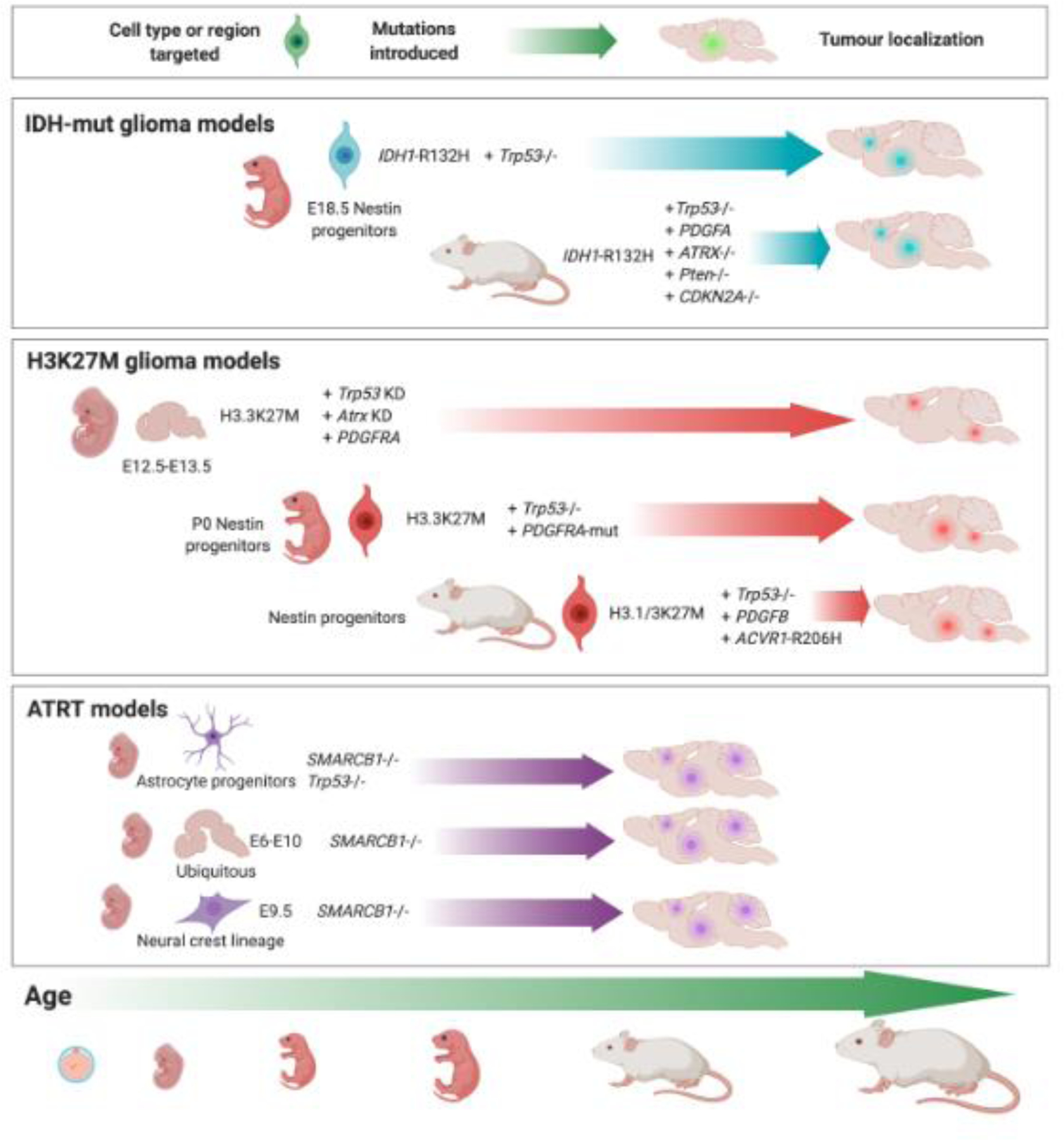
The introduction of epigenetic driver events in mice has revealed the dependencies of tumour formation on time windows, combinations of cooperating oncogenic stimuli, and cell type, lineage or brain region in which they are introduced. In H3K27M, added Trp53 loss is sufficient to induce HGGs. In other H3K27M mouse models, in addition to loss of p53 function, additional PDGFRA/PDGFB overexpression or activating mutations, or ACVR1-R206H appear needed to accelerate disease onset and induce features of human HGG. IDH1-R132H mutant cells also requires Trp53 loss for tumorigenicity and can promote tumours resembling human disease from late embryonic development to adulthood. Loss of Smarcb1 transforms neural progenitors either in combination with Trp53 loss, or on its own between embryonic development days 6–10.