


Figure 2.
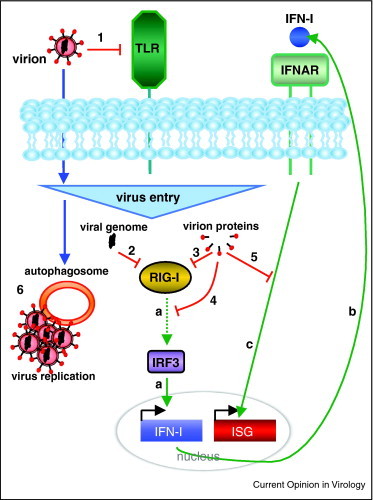
General viral strategies to avoid, inhibit or usurp innate antiviral responses immediately postentry. Variability of surface expressed viral proteins limits their detection by plasma membrane TLR (1). Within the cytosol, viral genomic PAMPs can be recognized par intracytosolic PRR, such as RIG-I. RIG-I induces IFN-I synthesis via the transcription factor IRF3 (a). Secreted IFN-I activates then its own receptor IFNAR (b) which transduces signals leading to antiviral ISG effectors production (c). Postvirus entry, certain viral genomes may escape from RIG-I detection either directly (2) or via inhibitory virion-incorporated proteins (3). IRF3 activation may also be inhibited by virion-incorporated proteins (4), to prevent IFN-I production. Moreover, virion-incorporated proteins could inhibit IFNAR-dependent signals to prevent antiviral ISG production (5). Independently, autophagy induction upon virus entry might be hijacked to facilitate subsequent virus replication (6).