


Fig. 1.
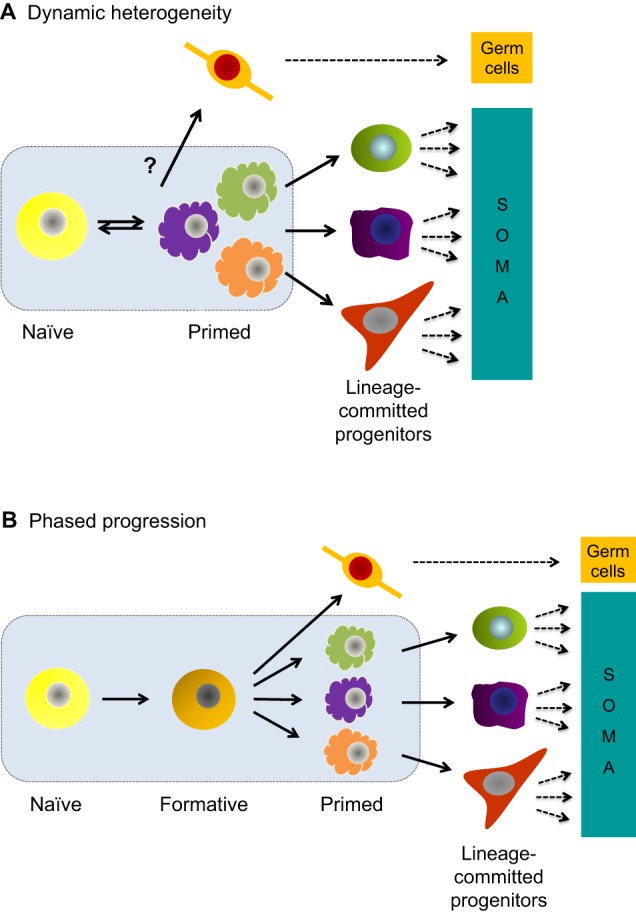
Dynamic heterogeneity and phased progression models of pluripotency. (A,B) In the dynamic heterogeneity model of pluripotency (A), naïve and metastable primed cell states co-exist and are interconvertible. Fluctuation between states creates windows of opportunity for commitment. Germline segregation is not well-delineated within this framework. In the phased progression model of pluripotency (B), cells transit sequentially through naïve to formative to primed forms of pluripotency en route to lineage commitment. In the embryo, this process is an orderly continuum. Ex vivo, however, ESCs cultured in serum may comprise all phases simultaneously and the unidirectional developmental order may even be reversed, creating a situation similar to the dynamic heterogeneity model. In both models, culture of mouse ESCs in 2iLIF ground-state conditions constrains pluripotency within the naïve phase. Dashed lines indicate multi-step differentiation, blue shading represents the Oct4-positive pluripotent populations.