


Figure 7. RHOA is an important mediator of growth signals to activate YAP/TAZ.
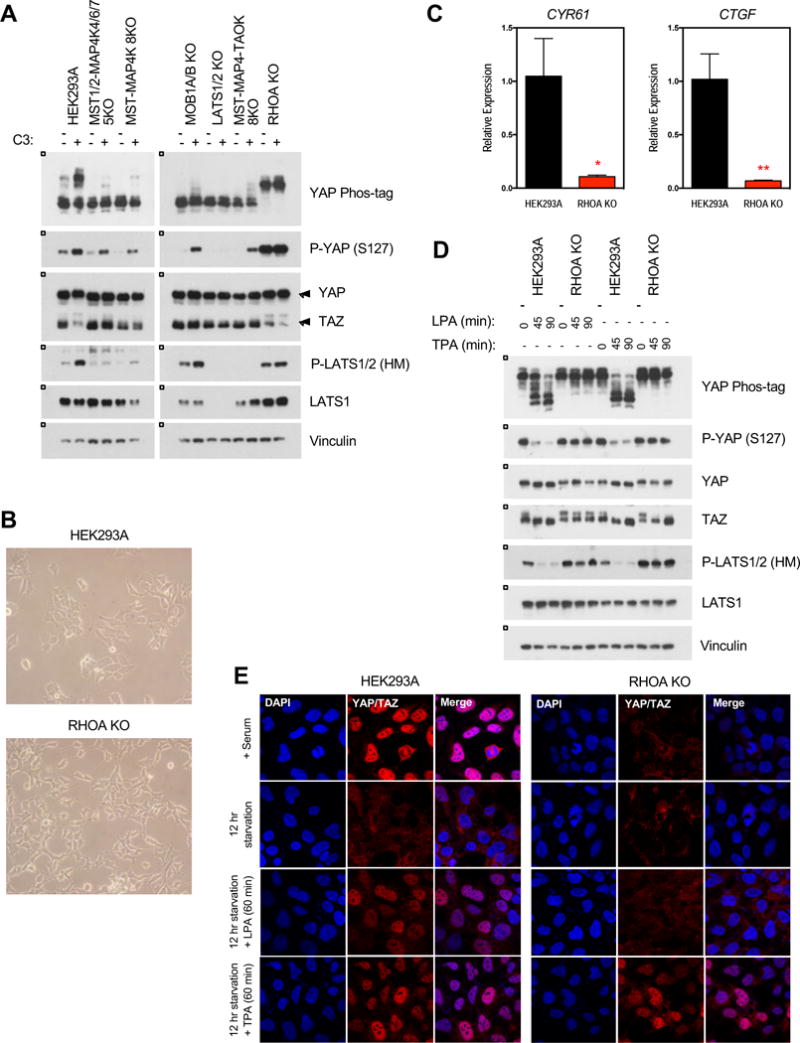
A. Treatment with the Rho inhibitor C3 exoenzyme (C3) induces YAP/TAZ phosphorylation. Cells were treated with C3 (1 ug/ml) for 4 hours. B. The RHOA KO cells showed altered morphology compared to the wild-type cells. C. Relative expression of CYR61 and CTGF in the presence of serum, as quantified by qPCR. Data represented as mean +/− S.D. D. LPA fails to induce YAP/TAZ dephosphorylation while TPA can induce TAZ dephosphorylation in the RHOA KO cells. Cells were starved overnight before treatment with LPA (0.5 uM) or TPA (5 nM). See Figure S6 for YAP/TAZ phosphorylation response of other cell lines. E. Immunofluorescence staining for YAP/TAZ (red) and DAPI (blue) in the HEK293A wild-type and RHOA KO cells. See Figure S4E for quantification.