


Figure 2.
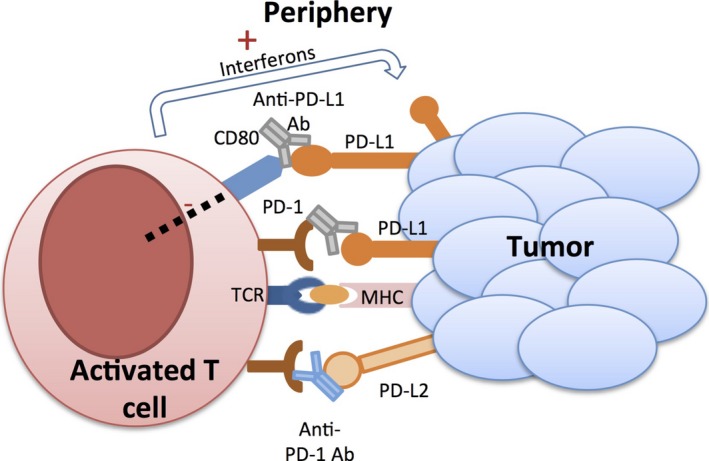
Schematic of the actions of anti‐programmed death‐1/programmed death ligand‐1 (PD‐1/PD‐L1) antibodies. In the periphery, PD‐1 can be inducibly expressed on the surface of T cells, as well as B cells and monocytes. T cell activation releases interferons that cause the upregulation of PD‐L1 and PD‐L2 on the surface of tumors (as well as on T cells, B cells, and antigen‐presenting cells, not shown here). Binding between PD‐1 and PD‐L1 causes downregulation of T cell activity and is intended to limit overly aggressive immune response in the periphery, but is capitalized by tumor cells to limit the antitumor response of the adaptive immune system. PD‐L1 on tumor cells also binds to CD80 on T cells, further initiating downregulation of activated T cells. Anti‐PD‐1 antibodies disrupt the PD‐1/PD‐L1 interaction, as well as PD‐1/PD‐L2 and PD‐L1/CD80 interaction. TCR, T‐cell receptor; ab, antibody; MHC, major histocompatibility complex.