


Figure 1.
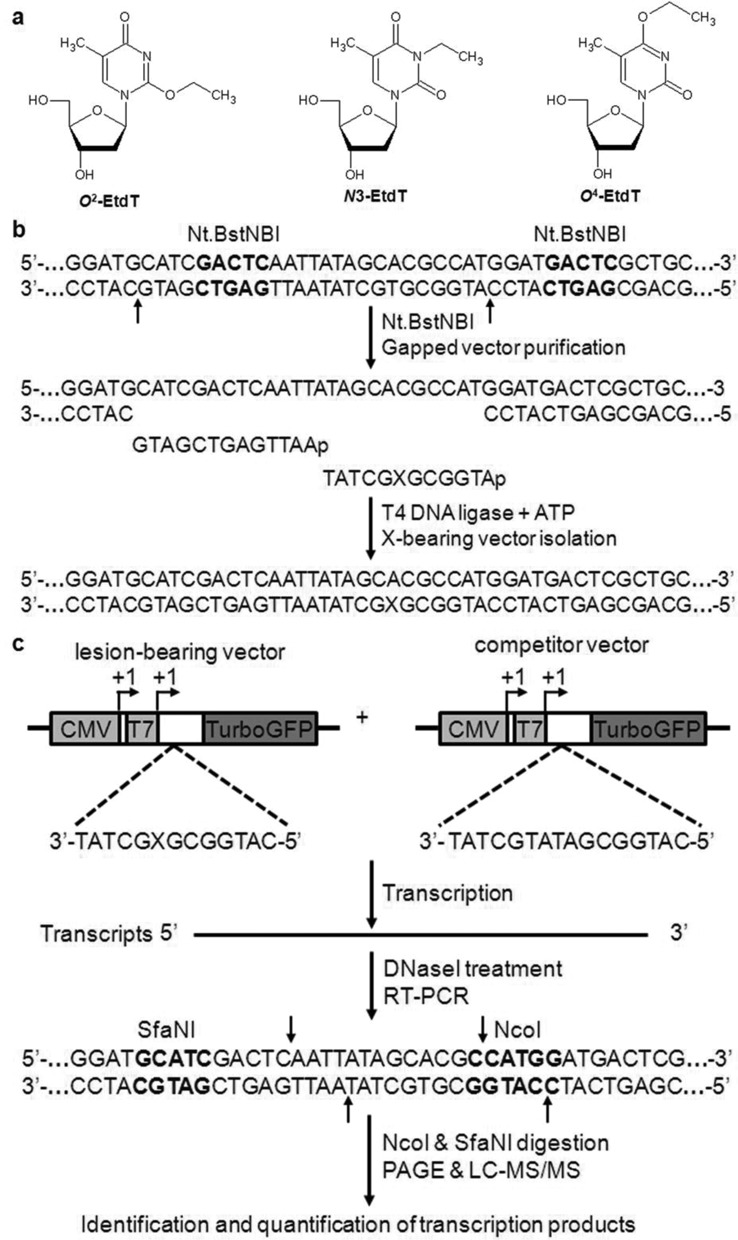
Experimental outline. (a) Chemical structures of N3-EtdT, O2-EtdT and O4-EtdT. (b) Schematic diagrams showing the procedures for the construction of the plasmids harboring a site-specifically incorporated N3-EtdT, O2-EtdT or O4-EtdT. (c) Strategy for assessing the impact of the EtdT lesions on DNA transcription. ‘X’ indicates N3-EtdT, O2-EtdT or O4-EtdT, which was located on the transcribed strand of TurboGFP gene downstream of the CMV and T7 promoters. The +1 transcription start sites are indicated by arrowheads. Lesion-bearing or lesion-free control plasmids were mixed with the competitor vector as DNA templates for in vitro or in vivo transcription assay. Although truncated RNA may be produced when transcription arrests at or near a lesion site, only run-off RNA is shown and used for RT-PCR. Among the RT-PCR products, only the wild-type sequence arising from the lesion-containing vector is shown. The arrows indicate the cleavage sites of Nt.BstNBI, NcoI and SfaNI. The last two enzymes are used to digest the RT-PCR products for subsequent PAGE and LC-MS/MS analyses.