


Figure 3.
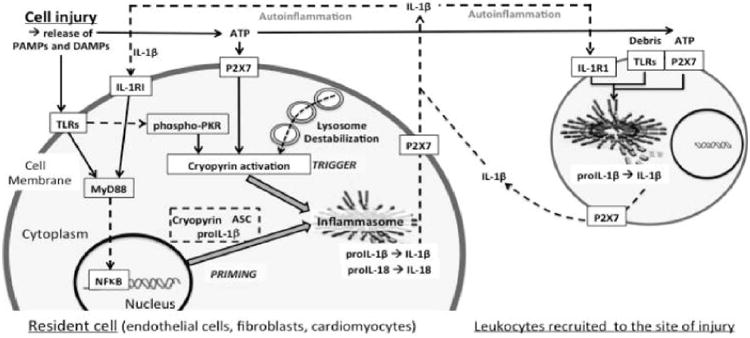
Cryopyrin activation and inflammasome formation. The figure shows a simplified scheme of cryopyrin activation and inflammasome formation in tissue resident cells and leukocytes recruited at the site of injury. TLR/IL-1RI agonists induce the inflammasome components (priming) through MyD88 signaling. ATP (through P2X7) or intracellular signals associated with lysosome destabilization activate cryopyrin triggering the formation of the inflammasome. The inflammasome processes and releases active IL-1β which further enhance the inflammatory response (autoinflammation). Data excerpted from Abbate et al.40. Abbreviations: ASC=apoptosis-associated speck-like protein containing a C-terminal caspase-recruitment domain; ATP=adenosine triphosphate; DAMP= danger-associated molecular patterns; IL-1=Interleukin-1; IL-1RI=IL-1 receptor type I; MyD88=myeloid differentiation factor-88; NF-κB=nuclear factor-κB; PAMP=pathogen-associated molecular pattern; P2X7=purinergic receptor 2X7; PKR=RNA dependent protein kinase; TLR=Toll-like receptor.