


Figure 5.
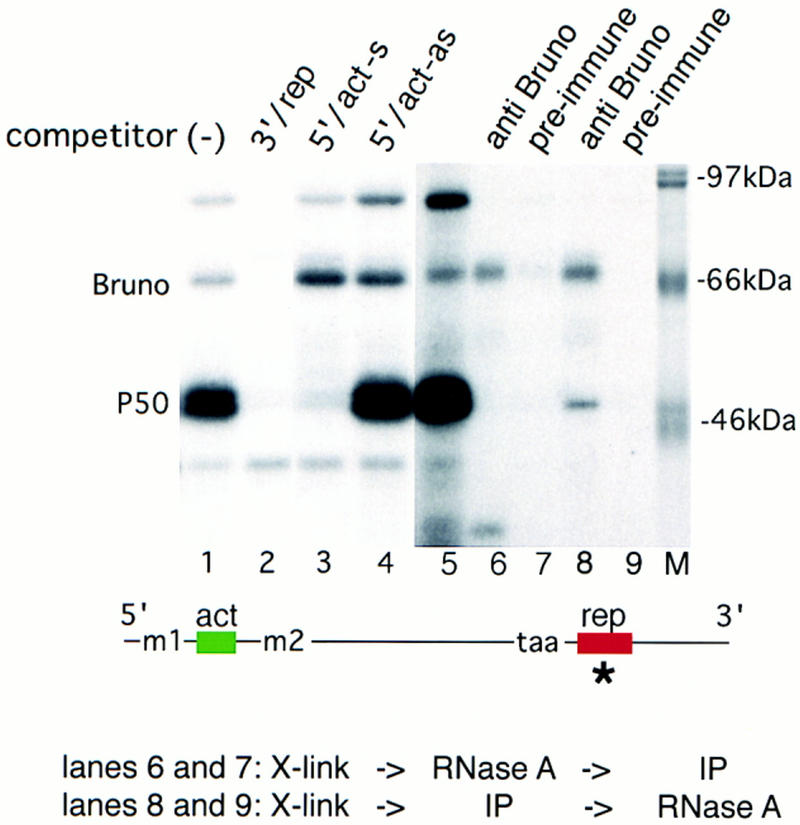
p50 binds both to the 5′ end of osk mRNA and to the repressor element in the 3′ UTR. An RNA competition assay was performed to determine the binding specificity of p50. A radioactive RNA probe consisting of the essential subfragment of the proximal repressor element (region AB; Kim-Ha et al. 1995) was incubated and UV cross-linked to proteins in the oocyte extract in the absence of competitor RNA (lane 1). Competitions were carried out with a 100-fold excess of either repressor fragment (rep, lane 2), EcoRI–BglII fragment containing the 5′ activator in sense orientation (5′/act-s, lane 3), or the same EcoRI–BglII fragment in antisense orientation (5′/act-as, lane 4). Immunoprecipitation of proteins UV cross-linked to radiolabeled repressor fragment (lane 5) by anti-Bruno antiserum (lane 6) or preimmune serum (lane 7). Simultaneous binding of p50 and Bruno was tested by treating with RNase A only after the immunoprecipitation. (Lane 8) Anti-Bruno antiserum; (lane 9) preimmune serum. We noted that in some cases (as shown here) the intensity of the upper band of the p50 doublet was reduced after coprecipitation. The locations of the 5′ and 3′ competitors in the osk transcript are indicated below. The radiolabeled probe is indicated by an asterisk. The reverse experiment, with activator element RNA as a radioactive probe, and cold activator and repressor RNA elements as unlabeled competitors, yielded the same result with respect to p50 (data not shown).