


Figure 2. Diet Response Surfaces for reproductive and longevity phenotypes.
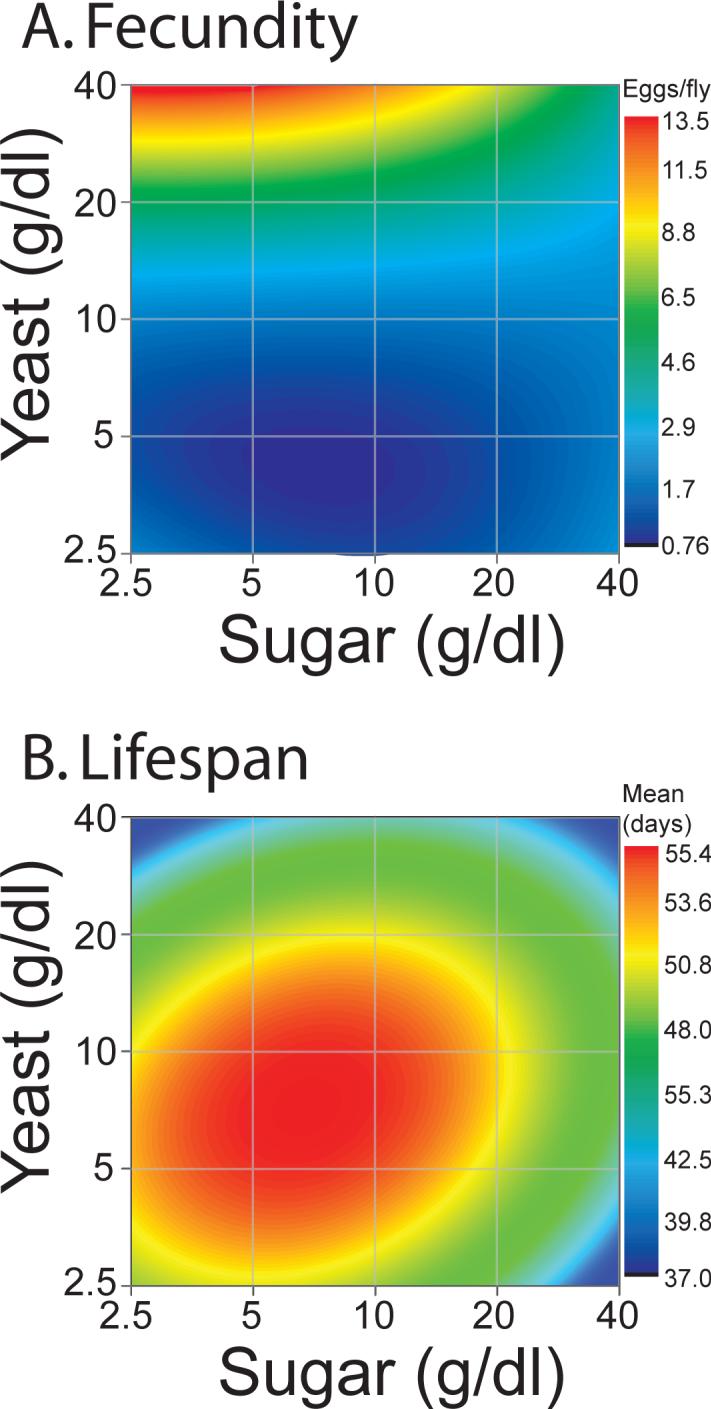
Fecundity (A) and lifespan (B) were measured in female flies maintained on each of 25 different diet regimes ranging from 2.5g·dl−1to 40g·dl−1 sugar and yeast. The data were used to estimate Diet Response Surfaces (see Experimental Procedures), which robustly characterize the impact of each dietary component on the phenotypes. Actual mean values for each diet and appropriate statistical analyses are presented in the supplementary data (Tables S1 and S2). Higher levels of dietary protein promote reproduction, while flies have the longest lifespan on a balanced diet. Fecundity is expressed as the eggs/day for each fly averaged over the two weeks (aged 3−17 days).