


Figure 6.
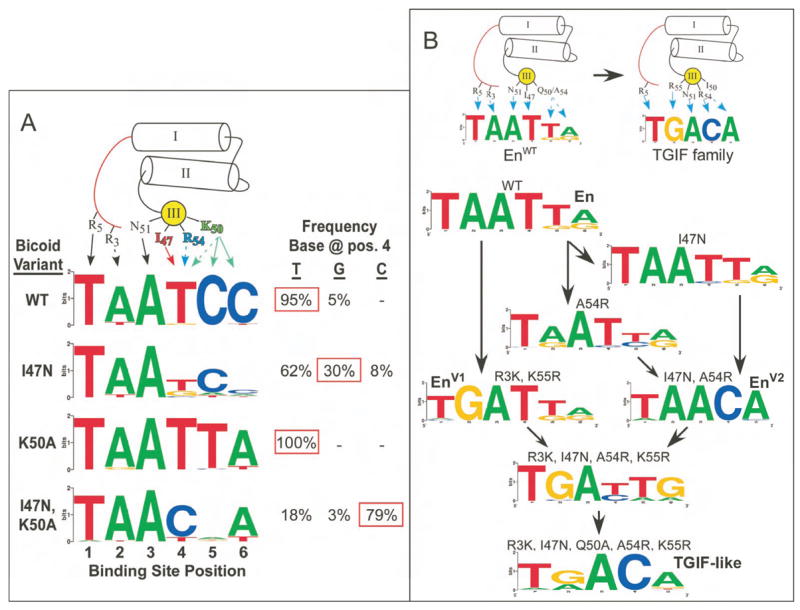
Exploring DNA-binding specificity through mutagenesis. A) Mutational analysis of binding site position 4 in Bcd. Three different mutants (I47N, K50A and I47N with K50A) were characterized to determine the alteration in base preference at this position. The frequency that each base was recovered at position 4 is indicated to the right of the Sequence logo for each factor. B) Conversion of Engrailed (En) into a homeodomain with TGIF-like specificity. (Top) Schematic representation of the critical base contacts responsible for specificity in En and TGIF family members. (Bottom) Flow diagram of the mutations required to complete the specificity conversion. Two intermediate specificity conversions (EnV1 and EnV2) were obtained first, and these mutations were combined along with Q50A to produce TGIF-like specificity.