


Figure 7. Revised model of HIV entry.
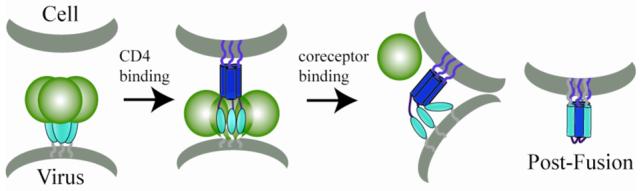
Based on the results of this study, we propose this altered model of HIV entry. CD4 binding induces formation of the pre-hairpin intermediate, in which the N-trimer region is exposed and the fusion peptide embedded in the target cell membrane. In this intermediate, the DSL and C-peptide regions of gp41 interact with gp120, preventing association with the N-trimer region. Coreceptor binding to gp120 triggers conformational changes that weaken the gp120/gp41 interface. The liberated C-peptide region can then interact with the N-trimer region to form the trimer of hairpins structure, leading to membrane fusion and viral entry.