


Figure 3.
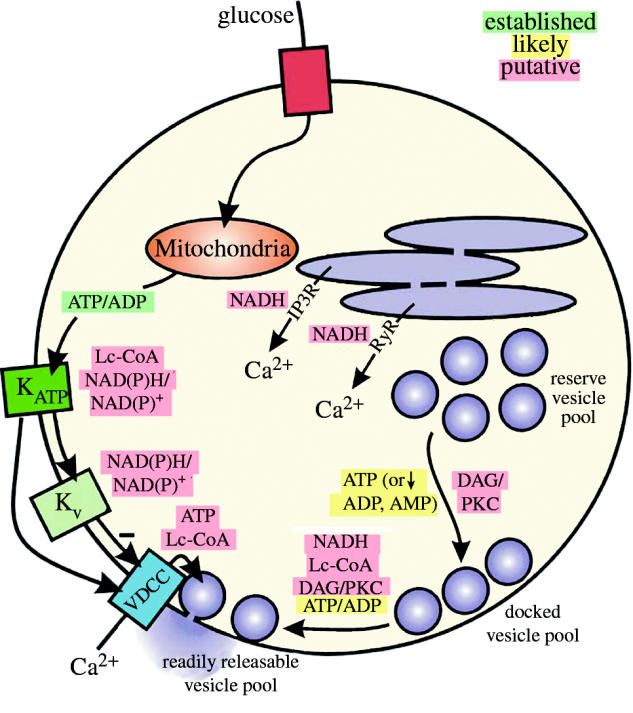
Stimulus–secretion coupling in the pancreatic β-cell. Glucose entry and mitochondrial metabolism increases the intracellular ATP-to-ADP ratio which leads to closure of KATP channels and membrane depolarization. This activates VDCCs, allowing influx of Ca2+ which triggers exocytosis of insulin granules. Kv channels also activate upon depolarization to mediate action potential repolarization, limiting Ca2+ entry and insulin secretion. Established and putative metabolic signalling molecules may regulate insulin secretion at a number of sites. These include the activity of ion channels, release of intracellular Ca2+ stores, mobilization and priming of secretory vesicles, and exocytosis. Here, we have shown the established (green), likely (yellow) and putative (red) regulatory interactions.