


Fig. 3.
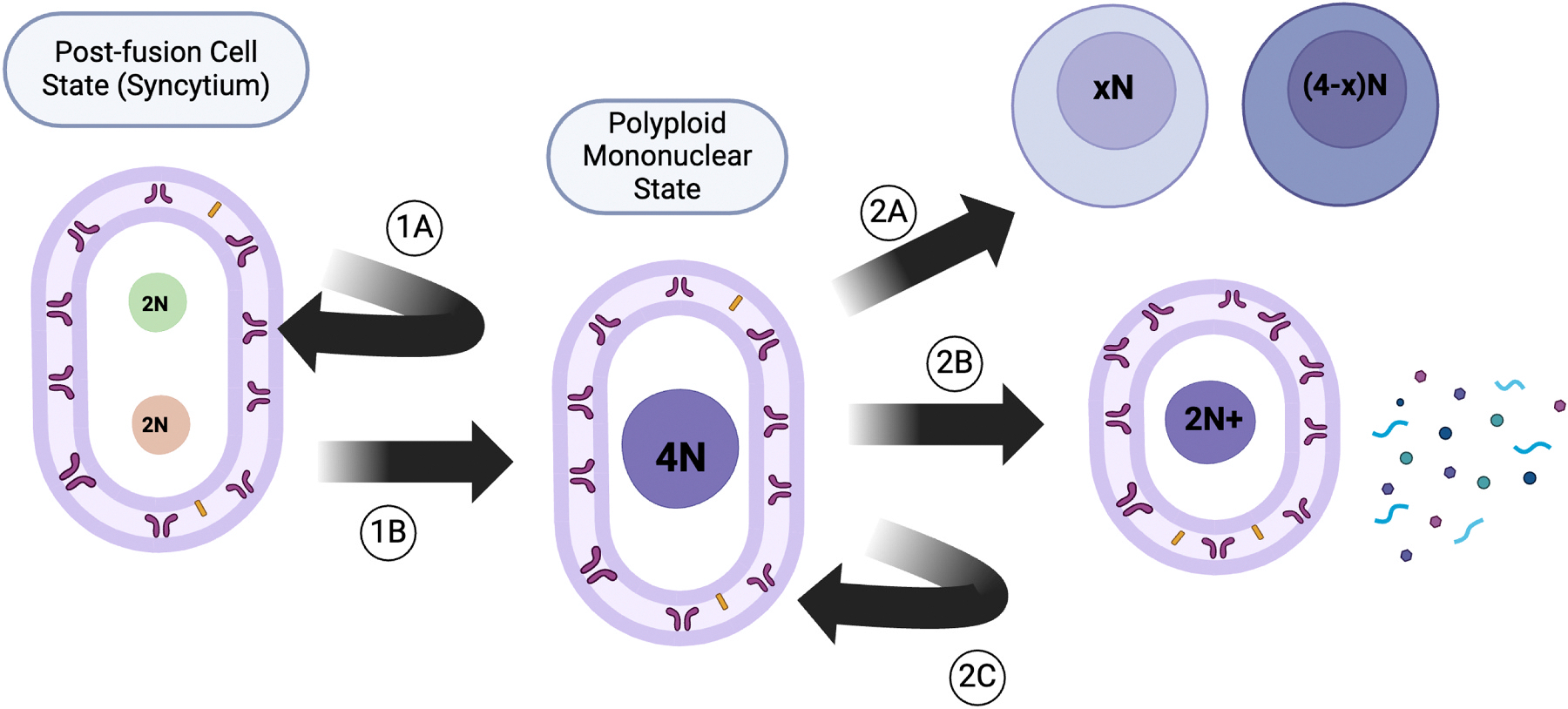
Potential outcomes of cell fusion. Following syncytial formation, there are a number of additional steps that can be taken, each leading to a different final cell state. Every step of the way, the cell may exit the cell cycle to enter a quiescent state (1A or 2C). There may be additional fusions with other cells (not shown) or nuclear fusion (1B). If the cell undergoes nuclear fusion, one additional possibility includes the formation of non-identical daughter cells following a mitosis event that may split the DNA content unequally (2A). The cell may normalize its DNA content via an alternative method known as polyploidy reduction, depicted by (2B).