



Abstract
Clinical trials frequently include multiple end points that mature at different times. The initial report, typically based on the primary end point, may be published when key planned co-primary or secondary analyses are not yet available. Clinical Trial Updates provide an opportunity to disseminate additional results from studies, published in JCO or elsewhere, for which the primary end point has already been reported.
We report 3-year efficacy and safety results from the phase III CheckMate 649 trial. Patients with previously untreated advanced or metastatic gastroesophageal adenocarcinoma were randomly assigned to nivolumab plus chemotherapy or chemotherapy. Primary end points were overall survival (OS) and progression-free survival (PFS) by blinded independent central review (BICR) in patients whose tumors expressed PD-L1 combined positive score (CPS) ≥5. With 36.2-month minimum follow-up, for patients with PD-L1 CPS ≥5, the OS hazard ratio (HR) for nivolumab plus chemotherapy versus chemotherapy was 0.70 (95% CI, 0.61 to 0.81); 21% versus 10% of patients were alive at 36 months, respectively; the PFS HR was 0.70 (95% CI, 0.60 to 0.81); 36-month PFS rates were 13% versus 8%, respectively. The objective response rate (ORR) per BICR was 60% (95% CI, 55 to 65) with nivolumab plus chemotherapy versus 45% (95% CI, 40 to 50) with chemotherapy; median duration of response was 9.6 months (95% CI, 8.2 to 12.4) versus 7.0 months (95% CI, 5.6 to 7.9), respectively. Nivolumab plus chemotherapy also continued to show improvement in OS, PFS, and ORR versus chemotherapy in the overall population. Adding nivolumab to chemotherapy maintained clinically meaningful long-term survival benefit versus chemotherapy alone, with an acceptable safety profile, supporting the continued use of nivolumab plus chemotherapy as standard first-line treatment for advanced gastroesophageal adenocarcinoma.
INTRODUCTION
First-line nivolumab plus chemotherapy has been approved for the treatment of unresectable advanced, non–human epidermal growth factor receptor 2 (HER2)–positive gastric, gastroesophageal junction, and esophageal adenocarcinoma in over 50 countries on the basis of the results from CheckMate 649. At 12.1-month minimum follow-up, nivolumab plus chemotherapy demonstrated improvement in all efficacy measures, including superior overall survival (OS; hazard ratio [HR], 0.71 [98.4% CI, 0.59 to 0.86]; P < .0001) and progression-free survival (PFS) by blinded independent central review (BICR; HR, 0.68 [98% CI, 0.56 to 0.81]; P < .0001) versus chemotherapy in patients with PD-L1 combined positive score (CPS) ≥5. Nivolumab plus chemotherapy also showed significant improvement in OS, along with PFS benefit versus chemotherapy in the overall population, and an acceptable safety profile.1 We report 3-year follow-up results from CheckMate 649.
METHODS
Study Design, Patients, and Procedures
Inclusion/exclusion criteria and procedures for the CheckMate 649 study have been previously described and a summary is provided in Appendix 1 (online only).1 Details are available in the Protocol (online only).
End Points, Assessments, and Statistical Analyses
Dual primary end points for the nivolumab plus chemotherapy versus chemotherapy arms were OS and PFS by BICR per RECIST, version 1.1, in patients with PD-L1 CPS ≥5. Secondary and exploratory end points, assessments, and statistical methods have been previously described and are provided in Appendix 1.1 The results reported here were not formally tested.
Statement of Institutional Review Board Approval and Informed Consent
The trial was done according to Good Clinical Practice guidelines developed by the International Council for Harmonisation and in compliance with the trial protocol. The protocol was approved by the institutional review boards or independent ethics committees at each site. All patients provided written informed consent as per the Declaration of Helsinki principles.
RESULTS
Patient Baseline Demographics
Study population is described in Appendix Figure A1. At clinical cutoff (May 31, 2022), the median follow-up was 47.4 months (range, 36.2-61.5) in the nivolumab plus chemotherapy arm and 47.3 months (range, 36.6-61.3) in the chemotherapy arm. Baseline demographics are shown in Table 1 and Appendix Table A1.
TABLE 1.
Baseline Demographics and Clinical Characteristics
| Characteristic | Patients With PD-L1 CPS ≥5 | All Randomly Assigned Patients | ||
|---|---|---|---|---|
| Nivolumab Plus Chemotherapy (n = 473) | Chemotherapy (n = 482) | Nivolumab Plus Chemotherapy (n = 789) | Chemotherapy (n = 792) | |
| Age, years, median (range) | 63 (18-88) | 62 (23-90) | 62 (18-88) | 61 (21-90) |
| <65 | 266 (56) | 286 (59) | 473 (60) | 488 (62) |
| ≥65 | 207 (44) | 196 (41) | 316 (40) | 304 (38) |
| Sex | ||||
| Male | 331 (70) | 349 (72) | 540 (68) | 560 (71) |
| Female | 142 (30) | 133 (28) | 249 (32) | 232 (29) |
| Racea | ||||
| Asian | 119 (25) | 117 (24) | 186 (24) | 189 (24) |
| Non-Asian | 354 (75) | 365 (76) | 603 (76) | 602 (76) |
| Region | ||||
| Asia | 117 (25) | 111 (23) | 178 (23) | 178 (22) |
| United States and Canada | 67 (14) | 70 (15) | 131 (17) | 132 (17) |
| Rest of the world | 289 (61) | 301 (62) | 480 (61) | 482 (61) |
| ECOG PSb | ||||
| 0 | 193 (41) | 204 (42) | 327 (41) | 337 (43) |
| 1 | 280 (59) | 278 (58) | 461 (58) | 452 (57) |
| Primary tumor location at initial diagnosis | ||||
| GC | 333 (70) | 334 (69) | 554 (70) | 556 (70) |
| GEJC | 84 (18) | 86 (18) | 132 (17) | 128 (16) |
| EAC | 56 (12) | 62 (13) | 103 (13) | 108 (14) |
| Tumor cell PD-L1 expressionc | ||||
| <1% | 363 (77) | 361 (75) | 663 (84) | 661 (83) |
| ≥1% | 110 (23) | 120 (25) | 126 (16) | 127 (16) |
| Previous surgery | ||||
| Yes | 98 (21) | 105 (22) | 161 (20) | 176 (22) |
| No | 375 (79) | 377 (78) | 628 (80) | 616 (78) |
| Disease stage | ||||
| Metastatic | 454 (96) | 461 (96) | 757 (96) | 756 (95) |
| Locally advanced | 16 (3) | 20 (4) | 27 (3) | 34 (4) |
| Locally recurrent | 3 (<1) | 1 (<1) | 5 (<1) | 2 (<1) |
| Organs with metastases | ||||
| 1 | 99 (21) | 96 (20) | 165 (21) | 179 (23) |
| ≥2 | 374 (79) | 386 (80) | 624 (79) | 613 (77) |
| Site of metastases | ||||
| Liver | 190 (40) | 217 (45) | 301 (38) | 313 (40) |
| Peritoneum | 102 (22) | 96 (20) | 188 (24) | 189 (24) |
| CNS | 1 (<1) | 0 | 1 (<1) | 0 |
| Signet ring cell carcinoma | ||||
| Yes | 72 (15) | 69 (14) | 145 (18) | 137 (17) |
| No | 401 (85) | 413 (86) | 644 (82) | 655 (83) |
| Lauren classification | ||||
| Intestinal type | 171 (36) | 176 (37) | 272 (34) | 267 (34) |
| Diffuse type | 137 (29) | 141 (29) | 254 (32) | 273 (34) |
| Mixed | 37 (8) | 30 (6) | 58 (7) | 48 (6) |
| Unknown | 128 (27) | 135 (28) | 205 (26) | 204 (26) |
| MSI status | ||||
| MSS | 424 (90) | 423 (88) | 696 (88) | 682 (86) |
| MSI-H | 18 (4) | 16 (3) | 23 (3) | 21 (3) |
| Not reported or invalid | 31 (7) | 43 (9) | 70 (9) | 89 (11) |
| Chemotherapy regimend | ||||
| FOLFOX | 237 (51) | 242 (52) | 422 (54) | 406 (53) |
| XELOX | 231 (49) | 223 (48) | 360 (46) | 361 (47) |
NOTE. Data are No. (%) unless otherwise indicated.
Abbreviations: CPS, combined positive score; EAC, esophageal adenocarcinoma; ECOG PS, Eastern Cooperative Oncology Group performance status; FOLFOX, fluorouracil plus leucovorin plus oxaliplatin; GC, gastric cancer; GEJC, gastroesophageal junction cancer; MSI, microsatellite instability; MSI-H, microsatellite instability-high; MSS, microsatellite stable; XELOX, capecitabine plus oxaliplatin.
Not reported for one patient in the overall chemotherapy arm.
On the basis of case report form. ECOG PS of 2 was reported in one patient treated with nivolumab plus chemotherapy and three patients treated with chemotherapy. The overall population had an ECOG performance status of 0 or 1 on the basis of interactive response technology.
Indeterminate, nonevaluable, or not reported for four patients in the chemotherapy arm.
Patients who received at least one dose of the assigned treatment.
Efficacy
With 36.2-month minimum follow-up, nivolumab plus chemotherapy continued to demonstrate improvement in median OS versus chemotherapy (14.4 months [95% CI, 13.1 to 16.2] v 11.1 months [95% CI, 10.0 to 12.1], respectively; HR, 0.70 [95% CI, 0.61 to 0.81]) in patients with PD-L1 CPS ≥5. OS benefit was also maintained in the overall population (HR, 0.79 [95% CI, 0.71 to 0.88]). OS rates at 36 months were higher with nivolumab plus chemotherapy versus chemotherapy (Figs 1A and 1B).
FIG 1.

Kaplan-Meier estimates of OS, PFS, and duration of response in (A, C, and E) patients with PD-L1 CPS ≥5 and (B, D, and F) all randomly assigned patients. aNumber of responders; bPer BICR assessment. BICR, blinded independent central review; Chemo, chemotherapy; CPS, combined positive score; HR, hazard ratio; NIVO, nivolumab; OS, overall survival; PFS, progression-free survival.
Nivolumab plus chemotherapy also maintained BICR-assessed median PFS benefit compared with chemotherapy (8.3 months [95% CI, 7.0 to 9.3] v 6.1 months [95% CI, 5.6 to 6.9], respectively; HR, 0.70 [95% CI, 0.60 to 0.81]) in patients with PD-L1 CPS ≥5. PFS benefit was also maintained in the overall population (HR, 0.79 [95% CI, 0.71 to 0.89]). PFS rates at 36 months were numerically higher with nivolumab plus chemotherapy compared with chemotherapy (Figs 1C and 1D).
Objective response rate (ORR) by BICR continued to be higher with nivolumab plus chemotherapy versus chemotherapy in patients with PD-L1 CPS ≥5 (60% [95% CI, 54.7 to 64.8] v 45% [95% CI, 40.1 to 50.2]). ORR was also higher in the overall population. In patients with PD-L1 CPS ≥5, the complete response rate was 13% with nivolumab plus chemotherapy versus 7% with chemotherapy. The median duration of response was 9.6 months (95% CI, 8.2 to 12.4) versus 7.0 months (95% CI, 5.6 to 7.9), respectively. The results were similar in the overall population (Appendix Table A2 and Figs 1E and 1F).
The HRs for OS consistently favored nivolumab plus chemotherapy over chemotherapy across multiple prespecified subgroups in patients with PD-L1 CPS ≥5 and in the overall population. The magnitude of OS benefit was greater in patients with microsatellite instability-high (MSI-H) tumors, and patients with microsatellite stable (MSS) tumors had results similar to the overall population (Fig 2). The unstratified HRs for OS with nivolumab plus chemotherapy versus chemotherapy in PD-L1 CPS ≥1, ≥5, and ≥10 subgroups were 0.75, 0.69, and 0.66, respectively; in PD-L1 CPS <1, <5, and <10 subgroups, the HRs were 0.95, 0.95, and 0.91, respectively. ORR was higher across all PD-L1 CPS subgroups with nivolumab plus chemotherapy versus chemotherapy (Appendix Fig A2).
FIG 2.

Forest plot of OS in prespecified subgroups with (A) PD-L1 CPS ≥5 and (B) all randomly assigned patients. aNot reported, n = 29; bindeterminate, nonevaluable, or not reported, n = 1; cinvalid/not available, n = 74; dECOG PS 2, n = 4; enot reported, n = 49; findeterminate, nonevaluable, or not reported, n = 4; ginvalid/not available, n = 159. Chemo, chemotherapy; CPS, combined positive score; EAC, esophageal adenocarcinoma; ECOG PS, Eastern Cooperative Oncology Group performance status; FOLFOX, fluorouracil plus leucovorin plus oxaliplatin; GC, gastric cancer; GEJC, gastroesophageal junction cancer; HR, hazard ratio; MSI, microsatellite instability; MSI-H, microsatellite instability-high; MSS, microsatellite stable; NIVO, nivolumab; OS, overall survival; ROW, rest of the world; XELOX, capecitabine plus oxaliplatin.
At week-18 landmark analysis of OS by response status, median OS in the nivolumab plus chemotherapy arm among measurable patients with PD-L1 CPS ≥5 and <5 and in the overall population was 20.8 (95% CI, 17.8 to 25.5), 17.7 (95% CI, 15.3 to 21.6), and 19.4 months (95% CI, 17.5 to 21.8) for responders (confirmed partial or complete response per BICR) and 11.6 (95% CI, 9.8 to 14.4), 9.7 (95% CI, 8.6 to 12.3), and 10.6 months (95% CI, 9.7 to 12.6) for nonresponders, respectively. In the chemotherapy arm, median OS was 15.5 (95% CI, 13.3 to 19.3), 15.3 (95% CI, 13.2 to 18.5), and 15.5 months (95% CI, 13.9 to 18.1) for responders and 10.8 (95% CI, 9.3 to 11.6), 11.5 (95% CI, 9.8 to 13.2), and 11.0 months (95% CI, 9.9 to 11.8) for nonresponders, respectively. The OS rates at 36 months were numerically higher for responders than for nonresponders regardless of PD-L1 CPS ≥5 or <5 (Appendix Fig A3).
Safety
Among all treated patients, median duration of treatment was 6.8 months (range, 0.1-57.7) for nivolumab plus chemotherapy and 4.9 months (range, 0.0-55.2) for chemotherapy. Any-grade treatment-related adverse events (TRAEs) occurred in 739 of 782 (95%) patients in the nivolumab plus chemotherapy arm and in 682 of 767 (89%) patients in the chemotherapy arm (grade 3 or 4, 60% v 45%; Appendix Table A3). No additional deaths occurred with longer follow-up.1
Most TRAEs with potential immunologic etiology were grade 1 or 2, and grade 3 or 4 events occurred in ≤5% of patients across organ categories (Appendix Table A4). Additional safety results are described in Appendix 1.
Patient-Reported Outcomes
Although baseline Functional Assessment of Cancer Therapy-Gastric (FACT-Ga) total scores were similar between the nivolumab plus chemotherapy and chemotherapy arms for patients with PD-L1 CPS ≥5 and the overall population, the least squares mean difference between treatment arms continued to favor nivolumab plus chemotherapy at most time points (Appendix Figs A4A-A4B). FACT-Ga GP5 questionnaire results continued to indicate more patients reporting not being bothered at all or being bothered a little bit by side effects from treatment with nivolumab plus chemotherapy versus chemotherapy (Appendix Figs A4C-A4D).
DISCUSSION
After 3 years of follow-up, nivolumab plus chemotherapy continued to demonstrate clinically meaningful OS improvement, with sustained separation of the Kaplan-Meier curves, higher OS rates, continued PFS benefit, and more durable responses in patients whose tumors expressed PD-L1 CPS ≥5 and in the overall population. A trend toward improved HRQoL versus chemotherapy alone was maintained over time, although there was no adjustment for multiple comparisons.2 OS benefit was also observed across subgroups, including in patients with poor prognostic factors, such as liver metastases. The magnitude of OS benefit was substantially greater in patients with MSI-H tumors, and the survival benefit in the MSS population was consistent with the overall population.
The magnitude of survival benefit continued to be enriched with nivolumab plus chemotherapy versus chemotherapy in patients with PD-L1 CPS ≥5. However, the results indicate no further meaningful clinical benefit with PD-L1 CPS ≥10. The 18-week landmark analysis of OS by response showed that patients who responded to nivolumab plus chemotherapy had longer OS and there was a numerically higher proportion of patients alive at 36 months than with nonresponders in PD-L1 CPS ≥5, <5, and the overall populations.
Recently, additional studies demonstrated benefit from adding PD-1 inhibitors to chemotherapy as first-line treatment in this patient population, expanding the existing clinical evidence in this disease setting.3-5 Patients with claudin-18 isoform 2 (CLDN18.2)–positive, HER2-negative gastric or gastroesophageal junction adenocarcinoma have shown prolonged survival from adding a monoclonal antibody targeting CLDN18.2 to chemotherapy compared with chemotherapy alone.6,7 These results indicate that targeted therapies in combination with chemotherapy also provide new treatment options for patients with gastric cancer.
To our knowledge, CheckMate 649 has the longest follow-up data, including OS, for first-line anti–PD-1 plus chemotherapy treatment for patients with gastroesophageal cancer. The data from this 3-year follow-up further support nivolumab plus chemotherapy as standard first-line treatment for patients with gastric, gastroesophageal junction, and esophageal adenocarcinoma.
ACKNOWLEDGMENT
The authors thank the patients and their families for making the trial possible, the investigators and the clinical study teams, Bristol Myers Squibb (Princeton, NJ), and Ono Pharmaceutical Company Ltd (Osaka, Japan). Analysis of patient-reported outcomes was supported by Steve Blum (Bristol Myers Squibb, Princeton, NJ) and Eric Davenport (RTI Health Solutions, Durham, NC). Dako (an Agilent Technologies, Inc company, Santa Clara, CA) participated in collaborative development of the PD-L1 IHC 28-8 pharmDx assay. Professional medical writing and editorial assistance were provided by Christiane Dresch, PhD, of Parexel, funded by Bristol Myers Squibb.
APPENDIX 1. ADDITIONAL METHODS
Study Design and Patients
Patients were eligible regardless of PD-L1 expression. Other key inclusion criteria were ≥1 measurable lesion or evaluable disease per RECIST, version 1.1, and an Eastern Cooperative Oncology Group (ECOG) performance status of 0 or 1. Patients with known human epidermal growth factor receptor 2–positive status were excluded. Additional eligibility criteria included patients with adequate organ function and ability to provide a fresh or archival tumor sample to determine PD-L1 status. Previous adjuvant or neoadjuvant chemotherapy, radiotherapy, and/or chemoradiotherapy (administered at least 6 months before random assignment) were allowed. Patients with untreated CNS metastases or peripheral neuropathy (above grade 1); active, known, or suspected autoimmune disease; positive test result for hepatitis B or hepatitis C virus; and known history of positive test for HIV or known AIDS were excluded. Previous systemic therapy for metastatic disease was not allowed. All patients provided written informed consent per Declaration of Helsinki principles.
Randomization and Masking
Patients were randomly assigned 1:1:1 to nivolumab plus chemotherapy, nivolumab plus ipilimumab, or chemotherapy, and then 1:1 to nivolumab plus chemotherapy versus chemotherapy once the nivolumab plus ipilimumab arm was closed. Randomization was performed using interactive web response technology with a block size of six and was stratified according to tumor cell PD-L1 status (≥1% v <1% or indeterminate), region (Asia v United States and Canada v rest of the world), ECOG performance status (0 v 1), and type of chemotherapy (capecitabine plus oxaliplatin [XELOX] v leucovorin plus fluorouracil plus oxaliplatin [FOLFOX]). Investigators were not blinded to treatment allocation.
Procedures
Eligible patients were at least age 18 years, with unresectable advanced or metastatic gastric cancer/gastroesophageal junction cancer/esophageal adenocarcinoma. In the nivolumab plus chemotherapy arm, nivolumab was administered either at a dose of 360 mg once every 3 weeks or 240 mg once every 2 weeks with investigator's choice of chemotherapy (XELOX [capecitabine 1,000 mg/m2 twice daily, days 1-14, and oxaliplatin 130 mg/m2, day 1, once every 3 weeks], or FOLFOX [leucovorin 400 mg/m2, once on day 1, fluorouracil 400 mg/m2, once on day 1 and 1,200 mg/m2, once on days 1-2, and oxaliplatin 85 mg/m2, day 1, once every 2 weeks]). In the chemotherapy arm, XELOX or FOLFOX were administered as indicated above. Capecitabine was administered orally; all other treatments were administered intravenously. Treatment continued until documented disease progression, unacceptable toxicity, withdrawal of consent, or study end. Nivolumab was given for a maximum of 2 years, and chemotherapy was given per local standards. Patients in the nivolumab plus chemotherapy arm were permitted to continue treatment beyond initial disease progression (per RECIST v1.1), on the basis of the investigator's judgment. Dose reductions were not permitted for nivolumab and were permitted per local standards for chemotherapy.
End Points and Assessments
Hierarchically tested secondary end points were overall survival (OS) in patients with PD-L1 CPS ≥1 and the overall population. Additional secondary end points not formally tested included blinded independent central review (BICR)–assessed PFS and objective response rate (ORR; evaluated in all patients with at least one target or measurable lesion at baseline) in patients across PD-L1 combined positive score (CPS) cutoffs and in the overall population and OS in patients with PD-L1 CPS ≥10. Key exploratory end points included BICR-assessed duration of response; efficacy across tumor cell PD-L1 expression cutoffs; landmark survival rates; health-related quality of life; and safety and tolerability (included patients who received at least one dose of study treatment).
The exploratory OS landmark analyses were performed in patients who were alive, evaluable, and not censored before 18 weeks grouped by response status per BICR assessment at the 18-week landmark time point. Responders had complete or partial response, and nonresponders had stable or progressive disease. The 18-week landmark time point was chosen by considering the balance among the proportion of patients alive at 18 weeks, the proportion of responders measured by 18 weeks, and the proportion of patients excluded from the analysis.
Tumors were assessed using computed tomography or magnetic resonance imaging per RECIST v1.1 by BICR at baseline, every 6 weeks from the start of cycle 1 for 48 weeks, and every 12 weeks thereafter until disease progression. Adverse events were assessed per investigator throughout the treatment period and during follow-up according to the National Cancer Institute Common Terminology Criteria for Adverse Events, version 4.0, and Medical Dictionary for Regulatory Activities, version 25.0. Treatment-relatedness refers to nivolumab, at least one chemotherapy drug component, or both.
Functional Assessment of Cancer Therapy-Gastric (FACT-Ga) analysis was done for patients with PD-L1 CPS ≥5 and all randomly assigned patients who had an assessment at baseline (before administration of treatment on day of first dose) and at least one subsequent assessment while on treatment. The questionnaire completion rate was calculated and summarized using descriptive statistics. The change from baseline was a linear function of treatment groups, trial assessment, baseline score, trial stratification factors, interaction between treatment group and trial assessment, interaction between baseline score and trial assessment, and any potential confounders. A clinically meaningful difference was defined as at least a 15.1-point change from baseline in FACT-Ga total score.8 The P value for the difference in least squares means was computed as the two-tailed probability using the t distribution. No adjustments were made for multiple comparisons.
Mean score and mean change from baseline for the FACT-Ga scale were estimated using mixed model for repeated measures. Treatment burden was assessed by the individual GP5 item of the FACT-Ga, which reads, “I am bothered by side effects of treatment” and has been described previously.1,9 Frequencies and percentages of the GP5 item question responses (not at all, a little bit, somewhat, quite a bit, and very much) were tabulated with 10 or more patients in each group.
PD-L1 expression was assessed by two central laboratories using the PD-L1 IHC 28-8 pharmDx assay according to the manufacturer's instructions (Dako, an Agilent Technologies, Inc company, Santa Clara, CA). Tumor cell PD-L1 expression was evaluated on at least 100 viable tumor cells and shown as a percentage of tumor cells with partial or complete membrane staining. CPS was evaluated on both tumor and tumor-associated immune cells as a ratio of the number of PD-L1 staining cells (tumor cells, lymphocytes, and macrophages) divided by the total number of viable tumor cells within the evaluated tumor area, multiplied by 100.
Additional Results
Safety
The most common any-grade treatment-related adverse events (TRAEs) were nausea, diarrhea, and peripheral neuropathy in both arms (Appendix Table A3). The most common grade 3 or 4 TRAEs were neutropenia, decreased neutrophil count, and anemia in the nivolumab plus chemotherapy arm and neutropenia, decreased neutrophil count, diarrhea, and vomiting in the chemotherapy arm. Serious TRAEs of any grade were reported in 176 (23%) patients (grade 3 or 4, n = 134 [17%]; grade 5, n = 4 [<1%]) and in 95 (12%) patients (grade 3 or 4, n = 78 [10%]), respectively. Any TRAEs leading to discontinuation were reported in 331 patients (42%) and 198 patients (26%), respectively. Sixteen deaths in the nivolumab plus chemotherapy arm and four deaths in the chemotherapy arm were treatment-related and have been previously described.1
Most TRAEs with potential immunologic etiology were grade 1 or 2, and grade 3 or 4 events occurred in ≤ 5% of patients across organ categories (Appendix Table A4).
The most common grade 3 or 4 TRAEs with potential immunologic etiology were diarrhea (n = 35), AST increased (n = 13), palmar-plantar erythrodysesthesia syndrome (n = 13), and pneumonitis (n = 12) with nivolumab plus chemotherapy.
TABLE A1.
Additional Baseline Demographics and Disease Characteristics
| Characteristic | Patients With PD-L1 CPS ≥5 | All Patients | ||
|---|---|---|---|---|
| Nivolumab Plus Chemotherapy (n = 473) | Chemotherapy (n = 482) | Nivolumab Plus Chemotherapy (n = 789) | Chemotherapy (n = 792) | |
| PD-L1 CPS expression | ||||
| <1 | — | — | 140 (18) | 125 (16) |
| ≥1 | — | — | 641 (81) | 656 (83) |
| <5 | — | — | 308 (39) | 299 (38) |
| ≥5 | — | — | 473 (60) | 482 (61) |
| Not evaluable/indeterminate/missing | — | — | 8 (1) | 11 (1) |
| Albumin | ||||
| <LLN | 107 (23) | 116 (24) | 180 (23) | 178 (22) |
| ≥LLN | 350 (74) | 347 (72) | 577 (73) | 581 (73) |
| Not reported | 16 (3) | 19 (4) | 32 (4) | 33 (4) |
| Previous adjuvant or neoadjuvant therapy | ||||
| Adjuvant | 39 (8) | 27 (6) | 64 (8) | 56 (7) |
| Neoadjuvant | 26 (5) | 37 (8) | 48 (6) | 62 (8) |
| Metastatic disease | 0 | 0 | 1 (<1) | 0 |
NOTE. Data are No. (%).
Abbreviations: CPS, combined positive score; LLN, lower limit of normal.
TABLE A2.
Response Rates and Duration of Response per BICR
| Outcome | Patients With PD-L1 CPS ≥5 | All Randomly Assigned Patients | ||
|---|---|---|---|---|
| Nivolumab Plus Chemotherapy (n = 378)a | Chemotherapy (n = 390)a | Nivolumab Plus Chemotherapy (n = 602)a | Chemotherapy (n = 607)a | |
| Objective response rateb | 226 (60) | 176 (45) | 350 (58) | 279 (46) |
| 95% CI | 54.7 to 64.8 | 40.1 to 50.2 | 54.1 to 62.1 | 41.9 to 50.0 |
| Best overall responsec | ||||
| Complete response | 50 (13) | 29 (7) | 67 (11) | 40 (7) |
| Partial response | 176 (47) | 147 (38) | 283 (47) | 239 (39) |
| Stable disease | 106 (28) | 132 (34) | 171 (28) | 200 (33) |
| Progressive disease | 25 (7) | 42 (11) | 41 (7) | 62 (10) |
| Not evaluable | 21 (6) | 40 (10) | 40 (7) | 66 (11) |
| Time to response,d months, median (range) | 1.5 (0.8-10.2) | 1.5 (1.0-13.7) | 1.5 (0.8-11.2) | 1.5 (0.6-13.7) |
| Duration of response,d months, median (95% CI) | 9.6 (8.2 to 12.4) | 7.0 (5.6 to 7.9) | 8.5 (7.7 to 9.9) | 6.9 (5.8 to 7.2) |
| Proportion of patients with duration of response,d % (95% CI) | ||||
| 12 months | 44 (37.2 to 50.6) | 30 (22.9 to 37.3) | 41 (35.9 to 46.7) | 28 (22.4 to 33.8) |
| 24 months | 25 (18.9 to 30.9) | 14 (8.7 to 20.0) | 21 (17.0 to 26.2) | 12 (7.6 to 16.2) |
| 36 months | 20 (14.1 to 25.5) | 12 (7.2 to 18.1) | 16 (12.1 to 20.7) | 9 (5.6 to 13.6) |
NOTE. Data are No. (%) unless otherwise indicated.
Abbreviations: BICR, blinded independent central review; CPS, combined positive score.
Randomly assigned patients who had target lesion measurements at baseline, per BICR assessment.
Confirmed complete response or partial response per RECIST v1.1.
Percentages may not add up to 100% because of rounding.
Evaluated in patients who had a response.
TABLE A3.
Summary of Treatment-Related Adverse Events in All Treated Patients
| Patients | Nivolumab Plus Chemotherapy (n = 782),a,b | Chemotherapy (n = 767),a,b | ||
|---|---|---|---|---|
| Any Grade | Grade 3-4 | Any Grade | Grade 3-4 | |
| All events | 739 (95) | 473 (60) | 682 (89) | 346 (45) |
| Serious events | 176 (23) | 134 (17) | 95 (12) | 78 (10) |
| Events leading to discontinuation | 331 (42) | 147 (19) | 198 (26) | 73 (10) |
| Events in 10% or more of treated patients in either arm | ||||
| Nausea | 328 (42) | 21 (3) | 300 (39) | 19 (2) |
| Diarrhea | 257 (33) | 35 (4) | 207 (27) | 24 (3) |
| Peripheral neuropathy | 228 (29) | 34 (4) | 194 (25) | 23 (3) |
| Anemia | 205 (26) | 47 (6) | 175 (23) | 20 (3) |
| Fatigue | 206 (26) | 30 (4) | 175 (23) | 18 (2) |
| Vomiting | 199 (25) | 17 (2) | 171 (22) | 24 (3) |
| Neutropenia | 196 (25) | 123 (16) | 185 (24) | 96 (13) |
| Decreased appetite | 158 (20) | 14 (2) | 139 (18) | 13 (2) |
| Neutrophil count decreased | 159 (20) | 84 (11) | 118 (15) | 67 (9) |
| Thrombocytopenia | 159 (20) | 21 (3) | 150 (20) | 14 (2) |
| Platelet count decreased | 161 (21) | 20 (3) | 115 (15) | 19 (2) |
| Peripheral sensory neuropathy | 137 (18) | 16 (2) | 119 (16) | 14 (2) |
| AST increased | 124 (16) | 13 (2) | 70 (9) | 5 (<1) |
| WBC count decreased | 115 (15) | 24 (3) | 77 (10) | 13 (2) |
| ALT increased | 91 (12) | 7 (<1) | 51 (7) | 5 (<1) |
| Palmar-plantar erythrodysesthesia syndrome | 98 (13) | 13 (2) | 85 (11) | 9 (1) |
| Lipase increased | 89 (11) | 45 (6) | 34 (4) | 16 (2) |
| Rash | 76 (10) | 7 (<1) | 11 (1) | 0 |
| Asthenia | 76 (10) | 7 (<1) | 83 (11) | 10 (1) |
NOTE. Data are No. (%). Common Terminology Criteria for Adverse Events, version 4.0, and Medical Dictionary for Regulatory Activities, version 25.0.
Patients who received at least one dose of the assigned treatment. Includes events reported between first dose and 30 days after last dose of trial therapy. Treatment-relatedness in the nivolumab plus chemotherapy group was attributed to either nivolumab or any of the chemotherapies or both.
There were 16 treatment-related deaths in the nivolumab plus chemotherapy arm (four events of pneumonitis, two events of febrile neutropenia or neutropenic fever, and one event each of acute cerebral infarction, disseminated intravascular coagulation, GI bleeding, GI toxicity, infection, intestinal mucositis, mesenteric thrombosis, pneumonia, septic shock, and stroke) and four deaths in the chemotherapy arm (one event each of asthenia and severe loss of appetite, diarrhea, pneumonitis, and pulmonary thromboembolism). Treatment-related deaths were reported regardless of time frame.
TABLE A4.
Treatment-Related Adverse Events With Potential Immunologic Etiology in All Treated Patients
| Event | Nivolumab Plus Chemotherapy (n = 782)a,b,c | Chemotherapy (n = 767)a,b,c | ||
|---|---|---|---|---|
| Any Grade | Grade 3-4d | Any Grade | Grade 3-4 | |
| Endocrine | 109 (14) | 6 (<1) | 3 (<1) | 0 |
| GI | 265 (34) | 43 (5) | 208 (27) | 25 (3) |
| Hepatic | 211 (27) | 32 (4) | 140 (18) | 18 (2) |
| Pulmonary | 41 (5) | 14 (2) | 4 (<1) | 1 (<1) |
| Renal | 28 (4) | 7 (<1) | 9 (1) | 2 (<1) |
| Skin | 219 (28) | 28 (4) | 109 (14) | 9 (1) |
NOTE. Data are No. (%). Common Terminology Criteria for Adverse Events, version 4.0, and Medical Dictionary for Regulatory Activities, version 25.0.
Patients who received ≥1 dose of study drug.
Treatment-related adverse events with potential immunologic etiology that require frequent monitoring/intervention.
Assessed in all treated patients during treatment and for up to 30 days after the last dose of study treatment.
The most common grade 3 or 4 events (≥2%) in the nivolumab plus chemotherapy arm was diarrhea (n = 35). There were no grade 5 events.
FIG A1.

CONSORT diagram. aEnrolled patients included all concurrently randomly assigned patients to nivolumab plus chemotherapy and chemotherapy as well as patients enrolled before the nivolumab plus ipilimumab arm was closed and not randomly assigned to any of the treatment arms. bIncluded death (n = 35), AEs (n = 24), poor/noncompliance (n = 15), and additional reasons (n = 54). cIncludes patients concurrently randomly assigned to the nivolumab plus chemotherapy and chemotherapy arms. dIncluded completion of treatment (n = 55), maximum clinical benefit (n = 12), lost to follow-up (n = 2), no longer met study criteria (n = 1), poor/noncompliance (n = 1), and other (n = 11). eIncluded maximum clinical benefit (n = 30), poor/noncompliance (n = 4), lost to follow-up (n = 2), death (n = 1), and other (n = 9). AE, adverse event; CPS, combined positive score; OS, overall survival; PFS, progression-free survival.
FIG A2.
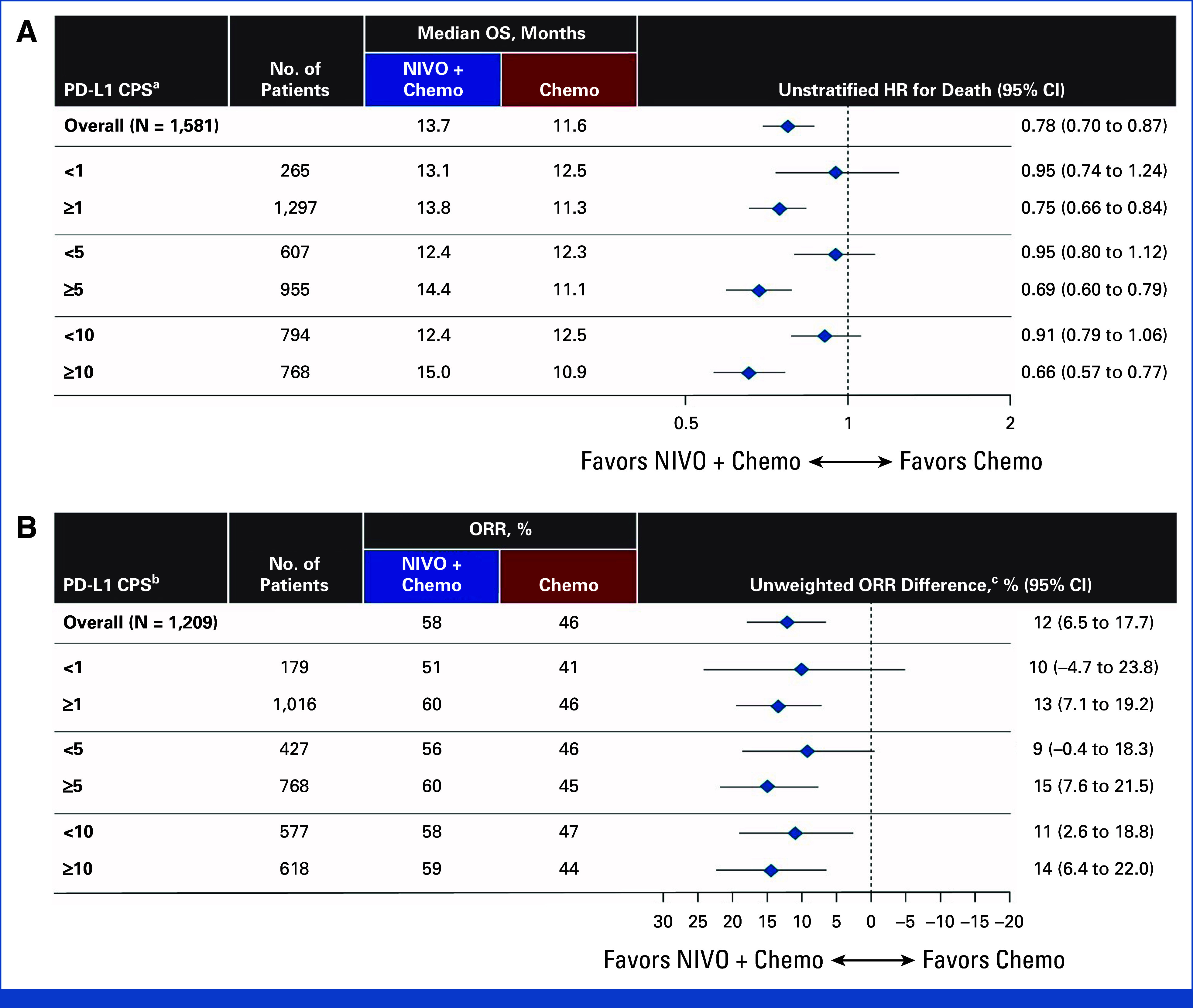
Subgroup analysis by PD-L1 CPS subpopulation for (A) OS and (B) objective rate response. aPD-L1 CPS expression indeterminate/not reported, n = 19; bPD-L1 CPS expression indeterminate/not reported, n = 14; crandomly assigned patients who had target lesion measurements at baseline, per BICR; dpercentages may not reflect an exact difference because of rounding. BICR, blinded independent central review; Chemo, chemotherapy; CPS, combined positive score; HR, hazard ratio; NIVO, nivolumab; ORR, objective response rate; OS, overall survival.
FIG A3.

OS by response status at week 18 landmark in patients with (A) PD-L1 CPS ≥5, (B) PD-L1 CPS <5, and (C) all randomly assigned patients. Patients had measurable disease per BICR at baseline, had a tumor evaluation before or at 18 weeks, and were alive, evaluable, and not censored before 18 weeks. aPatients who had achieved confirmed partial response or complete response per BICR before or at the time of landmark. BICR, blinded independent central review; Chemo, chemotherapy; CPS, combined positive score; NIVO, nivolumab; OS, overall survival.
FIG A4.

Least squares mean change (95% CI) in FACT-Ga total score and FACT-Ga GP5 (“I am bothered by side effects of treatment”) item values in (A and C) patients with PD-L1 CPS ≥5 and (B and D) the overall population. Least squares mean (95% CI) change from baseline in FACT-Ga total score with nivolumab plus chemotherapy versus chemotherapy in (A) patients with PD-L1 CPS ≥5 (completion at baseline: nivolumab plus chemotherapy, n = 412; chemotherapy, n = 386) and (B) the overall population (completion at baseline: nivolumab plus chemotherapy, n = 679; chemotherapy, n = 639). Data in A and B are presented as least squares mean change from baseline and 95% CI. Top and bottom dotted and dashed lines indicate minimally important difference in score. The primary meaningful change threshold is 15.1 (dotted lines) and the sensitivity threshold is 10.4 (dashed lines). The P value for the difference in least squares means was computed as the two-tailed probability using the t distribution. No adjustments were made for multiple comparisons. *P < .05 for contrast between nivolumab plus chemotherapy versus chemotherapy; not formally tested. FACT-Ga GP5 (“I am bothered by side effects of treatment”) item values in (C) patients with PD-L1 CPS ≥5 and (D) the overall population. Chemo, chemotherapy; CPS, combined positive score; FACT-Ga, Functional Assessment of Cancer Therapy-Gastric; NIVO, nivolumab.
Yelena Y. Janjigian
Stock and Other Ownership Interests: Inspirna
Honoraria: Astellas Pharma, AstraZeneca, Bristol Myers Squibb, Daiichi Sankyo, Master Clinician Alliance, Michael J. Hennessy Associates, Merck, Peerview, Research to Practice
Consulting or Advisory Role: Pfizer, Merck, Bristol Myers Squibb, Merck Serono, Daiichi Sankyo, Rgenix, Bayer, Imugene, AstraZeneca, Lilly, Zymeworks, Basilea Pharmaceutical, Michael J. Hennessy Associates, Paradigm, Seagen, AmerisourceBergen, Arcus Biosciences, Geneos, GlaxoSmithKline, Imedex, Lynx Health, Peerview, Silverback Therapeutics, Mersana, Research to Practice, AskGene Pharma, Phanes Therapeutics, Abbvie, Astellas Pharma, Guardant Health, Jazz Pharmaceuticals
Research Funding: Bayer (Inst), Rgenix (Inst), Bristol Myers Squibb (Inst), Merck (Inst), Lilly (Inst), NCI (Inst), Department of Defense (Inst), Cycle for Survival (Inst), Fred's Team (Inst), Genentech/Roche (Inst), AstraZeneca (Inst), Arcus Biosciences (Inst), Transcenta (Inst)
Travel, Accommodations, Expenses: Bristol Myers Squibb Japan, Merck
Other Relationship: Clinical Care Options, Axis Medical Education, Research to Practice
Jaffer A. Ajani
Honoraria: Lilly, Bristol Myers Squibb, Merck, Aduro Biotech, DAVA Pharmaceuticals, AstraZeneca, Acrotech Biopharma, zymeworks, Astellas Pharma, Amgen, oncotherics, Daiichi Sankyo, Novartis, Servier, Gilead Sciences, BeiGene, Fresenius Kabi, Boehringer Ingelheim, GRAIL
Consulting or Advisory Role: American Cancer Society, BeiGene, Vaccinogen, Insys Therapeutics, Merck, Bristol Myers Squibb, Novartis, Astellas Pharma, BeiGene, Gilead Sciences, Amgen, Servier, Geneos, Arcus Biosciences
Research Funding: Novartis, Bristol Myers Squibb, Taiho Pharmaceutical, Roche/Genentech, Amgen, Lilly/ImClone, Merck, Delta-Fly Pharma, Gilead Sciences, Takeda, ProLynx, Zymeworks, Daiichi Sankyo, Astellas Pharma (Inst)
Patents, Royalties, Other Intellectual Property: I have research funding from: Genentech, Roche, Bristol Myers Squibb, Taiho, MedImmune, Merck, Amgen, Lilly
Markus Moehler
Honoraria: Amgen, Roche/Genentech, Merck Serono, MSD Oncology, Bristol Myers Squibb, AstraZeneca/MedImmune, Servier, Pierre Fabre, Sanofi, Transcenta, Idience, Triptych Health Partners, Daiichi Sankyo Europe GmbH, Astellas Pharma, Bayer Schering Pharma
Consulting or Advisory Role: Bayer, MSD, Merck Serono, Amgen, Taiho Pharmaceutical, Lilly, Servier, BeiGene, Bristol Myers Squibb, AstraZeneca, Nordic Group, Daiichi Sankyo Europe GmbH
Research Funding: Amgen (Inst), Leap Therapeutics (Inst), Merck Serono (Inst), AstraZeneca (Inst), MSD (Inst), Taiho Pharmaceutical (Inst)
Travel, Accommodations, Expenses: Amgen, Merck Serono, Roche, Bayer, ASCO, German Cancer Society, MSD, ESMO, BeiGene, Sanofi Pasteur
Lin Shen
Consulting or Advisory Role: MSD, AstraZeneca, Boehringer Ingelheim, Servier, Transcenta Holding Limited
Research Funding: BeiGene (Inst)
Marcelo Garrido
Consulting or Advisory Role: MSD, AstraZeneca, Roche
Speakers' Bureau: Bristol Myers Squibb, Bayer, MERCK
Research Funding: Bristol Myers Squibb (Inst), Novartis (Inst)
Expert Testimony: AstraZeneca
Travel, Accommodations, Expenses: Roche
Lucjan Wyrwicz
Honoraria: BeiGene, Bristol Myers Squibb, MSD
Consulting or Advisory Role: GlaxoSmithKline, Servier
Speakers' Bureau: Bristol Myers Squibb
Travel, Accommodations, Expenses: Servier
Kensei Yamaguchi
Consulting or Advisory Role: Bristol Myers Squibb Japan, Daiichi Sankyo
Speakers' Bureau: Chugai Pharma, Bristol Myers Squibb Japan, Takeda, Taiho Pharmaceutical, Lilly, Ono Pharmaceutical, Daiichi Sankyo, Merck
Research Funding: Ono Pharmaceutical (Inst), Taiho Pharmaceutical (Inst), Daiichi Sankyo (Inst), Lilly (Inst), Gilead Sciences (Inst), Yakult Honsha (Inst), Chugai Pharma (Inst), Boehringer Ingelheim (Inst), Eisai (Inst), MSD Oncology (Inst), Sanofi (Inst), Bristol Myers Squibb (Inst)
James M. Cleary
Honoraria: Blueprint Medicines, Syros Pharmaceuticals, Incyte
Research Funding: Merck, Tesaro, AstraZeneca, Esperas Pharma, Merus (Inst), Roche/Genentech (Inst), BMS Bristol Myers Squibb (Inst), Bristol Myers Squibb (Inst), Bayer, Apexigen, Arcus Biosciences, Arcus Biosciences, Servier (Inst)
Travel, Accommodations, Expenses: Roche, Agios, Bristol Myers Squibb, Incyte
Elena Elimova
Employment: Merck
Consulting or Advisory Role: Bristol Myers Squibb (Inst), Zymeworks (Inst), Adaptimmune (Inst), BeiGene (Inst), Astellas Pharma, Viracta Therapeutics
Research Funding: Bristol Myers Squibb (Inst), Zymeworks (Inst), AstraZeneca Canada (Inst), Bold Therapeutics (Inst)
Michalis Karamouzis
Honoraria: Bristol Myers Squibb, MSD, Astellas Pharma, Roche, Pfizer Hellas, Servier
Speakers' Bureau: BMSi
Travel, Accommodations, Expenses: Ipsen
Ricardo Bruges
Consulting or Advisory Role: Bristol Myers Squibb, Merck, Novartis, Pfizer, Bristol Myers Squibb/Medarex, MSD Oncology, Pfizer
Travel, Accommodations, Expenses: Pfizer, Tecnofarma, MSD Oncology, Tecnofarma, Pfizer
Tomasz Skoczylas
Research Funding: Bristol Myers Squibb Japan
Travel, Accommodations, Expenses: Olympus
Arinilda Bragagnoli
Speakers' Bureau: Bristol Myers Squibb/Medarex, AstraZeneca, Merck
Mustapha Tehfe
Honoraria: Bristol Myers Squibb, Merck, Taiho Pharmaceutical, Pfizer
Consulting or Advisory Role: Taiho Pharmaceutical, Bristol Myers Squibb
Research Funding: Pfizer Hellas (Inst), Taiho Pharmaceutical (Inst)
Thomas Zander
Consulting or Advisory Role: Roche, Pfizer, Bristol Myers Squibb, MSD Oncology, Novartis, AstraZeneca
Ruben Kowalyszyn
Consulting or Advisory Role: Bristol Myers Squibb Argentina, MSD Oncology, Astellas Pharma, Merck Serono, Takeda
Speakers' Bureau: BMS Bristol Myers Squibb Argentina, Novartis
Research Funding: BMS Bristol Myers Squibb, MSD Oncology, Novartis, Roche, Astellas Pharma, Lilly, Gemabiotech, Nektar, Poliphor, AstraZeneca, AstraZeneca, Pfizer
Travel, Accommodations, Expenses: Gador, Pfizer/EMD Serono
Roberto Pazo-Cid
Consulting or Advisory Role: Roche, Bristol Myers Squibb/Celgene, Eisai Europe, Astellas Pharma, AstraZeneca Spain, Servier, Ipsen
Speakers' Bureau: Bristol Myers Squibb GmbH & Co, KG, Servier, AstraZeneca Spain, Astellas Pharma
Travel, Accommodations, Expenses: Lilly, Bristol Myers Squibb GmbH & Co, KG
Michael Schenker
Research Funding: Bristol Myers Squibb, Roche, Amgen, MSD, Pfizer/EMD Serono, Lilly, Astellas Pharma, AstraZeneca, GlaxoSmithKline, Regeneron, Novartis, Abbvie, Gilead Sciences, Sanofi/Regeneron, Mylan, BIOVEN, Clovis Oncology, Tesaro, Tesaro, BeiGene, Five Prime Therapeutics
Travel, Accommodations, Expenses: Bristol Myers Squibb
Ming Lei
Employment: Bristol Myers Squibb
Stock and Other Ownership Interests: Bristol Myers Squibb
Patents, Royalties, Other Intellectual Property: Inventor of pending BMS patents
Clara Chen
Employment: Bristol Myers Squibb/Celgene
Stock and Other Ownership Interests: Bristol Myers Squibb/Celgene
Raheel Nathani
Employment: Bristol Myers Squibb
Stock and Other Ownership Interests: Bristol Myers Squibb
Travel, Accommodations, Expenses: Bristol Myers Squibb
Kohei Shitara
Honoraria: Bristol Myers Squibb, Janssen, AstraZeneca, Lilly, Ono Pharmaceutical, Astellas Pharma
Consulting or Advisory Role: Bristol Myers Squibb, Takeda, Ono Pharmaceutical, MSD, Novartis, Daiichi Sankyo, Amgen, Astellas Pharma, Guardant Health, Bayer, Zymeworks, AstraZeneca, ALX Oncology
Research Funding: MSD (Inst), Daiichi Sankyo (Inst), Taiho Pharmaceutical (Inst), Chugai Pharma (Inst), Ono Pharmaceutical (Inst), Astellas Pharma (Inst), Eisai (Inst), Amgen (Inst), PRA Health Sciences (Inst)
No other potential conflicts of interest were reported.
PRIOR PRESENTATION
Presented in part at the ASCO Gastrointestinal Cancers Symposium, San Francisco, CA, January 23-25, 2023.
SUPPORT
Supported by Bristol Myers Squibb and Ono Pharmaceutical Company.
CLINICAL TRIAL INFORMATION
DATA SHARING STATEMENT
A data sharing statement provided by the authors is available with this article at DOI https://doi.org/10.1200/JCO.23.01601.
AUTHOR CONTRIBUTIONS
Conception and design: Yelena Y. Janjigian, Jaffer A. Ajani, Markus Moehler, Ming Lei, Kohei Shitara
Provision of study materials or patients: Yelena Y. Janjigian, Jaffer A. Ajani, Markus Moehler, Lin Shen, Marcelo Garrido, Carlos Gallardo, Lucjan Wyrwicz, Kensei Yamaguchi, James M. Cleary, Elena Elimova, Michalis Karamouzis, Ricardo Bruges, Tomasz Skoczylas, Arinilda Bragagnoli, Tianshi Liu, Mustapha Tehfe, Thomas Zander, Ruben Kowalyszyn, Roberto Pazo-Cid, Michael Schenker, Kynan Feeney, Kohei Shitara
Collection and assembly of data: Yelena Y. Janjigian, Jaffer A. Ajani, Markus Moehler, Lin Shen, Marcelo Garrido, Carlos Gallardo, Lucjan Wyrwicz, Kensei Yamaguchi, James M. Cleary, Elena Elimova, Michalis Karamouzis, Ricardo Bruges, Tomasz Skoczylas, Arinilda Bragagnoli, Tianshi Liu, Mustapha Tehfe, Thomas Zander, Ruben Kowalyszyn, Roberto Pazo-Cid, Michael Schenker, Kynan Feeny, Kohei Shitara
Data analysis and interpretation: All authors
Manuscript writing: All authors
Final approval of manuscript: All authors
Accountable for all aspects of the work: All authors
AUTHORS' DISCLOSURES OF POTENTIAL CONFLICTS OF INTEREST
First-Line Nivolumab Plus Chemotherapy for Advanced Gastric, Gastroesophageal Junction, and Esophageal Adenocarcinoma: 3-Year Follow-Up of the Phase III CheckMate 649 Trial
The following represents disclosure information provided by authors of this manuscript. All relationships are considered compensated unless otherwise noted. Relationships are self-held unless noted. I = Immediate Family Member, Inst = My Institution. Relationships may not relate to the subject matter of this manuscript. For more information about ASCO's conflict of interest policy, please refer to www.asco.org/rwc or ascopubs.org/jco/authors/author-center.
Open Payments is a public database containing information reported by companies about payments made to US-licensed physicians (Open Payments).
Yelena Y. Janjigian
Stock and Other Ownership Interests: Inspirna
Honoraria: Astellas Pharma, AstraZeneca, Bristol Myers Squibb, Daiichi Sankyo, Master Clinician Alliance, Michael J. Hennessy Associates, Merck, Peerview, Research to Practice
Consulting or Advisory Role: Pfizer, Merck, Bristol Myers Squibb, Merck Serono, Daiichi Sankyo, Rgenix, Bayer, Imugene, AstraZeneca, Lilly, Zymeworks, Basilea Pharmaceutical, Michael J. Hennessy Associates, Paradigm, Seagen, AmerisourceBergen, Arcus Biosciences, Geneos, GlaxoSmithKline, Imedex, Lynx Health, Peerview, Silverback Therapeutics, Mersana, Research to Practice, AskGene Pharma, Phanes Therapeutics, Abbvie, Astellas Pharma, Guardant Health, Jazz Pharmaceuticals
Research Funding: Bayer (Inst), Rgenix (Inst), Bristol Myers Squibb (Inst), Merck (Inst), Lilly (Inst), NCI (Inst), Department of Defense (Inst), Cycle for Survival (Inst), Fred's Team (Inst), Genentech/Roche (Inst), AstraZeneca (Inst), Arcus Biosciences (Inst), Transcenta (Inst)
Travel, Accommodations, Expenses: Bristol Myers Squibb Japan, Merck
Other Relationship: Clinical Care Options, Axis Medical Education, Research to Practice
Jaffer A. Ajani
Honoraria: Lilly, Bristol Myers Squibb, Merck, Aduro Biotech, DAVA Pharmaceuticals, AstraZeneca, Acrotech Biopharma, zymeworks, Astellas Pharma, Amgen, oncotherics, Daiichi Sankyo, Novartis, Servier, Gilead Sciences, BeiGene, Fresenius Kabi, Boehringer Ingelheim, GRAIL
Consulting or Advisory Role: American Cancer Society, BeiGene, Vaccinogen, Insys Therapeutics, Merck, Bristol Myers Squibb, Novartis, Astellas Pharma, BeiGene, Gilead Sciences, Amgen, Servier, Geneos, Arcus Biosciences
Research Funding: Novartis, Bristol Myers Squibb, Taiho Pharmaceutical, Roche/Genentech, Amgen, Lilly/ImClone, Merck, Delta-Fly Pharma, Gilead Sciences, Takeda, ProLynx, Zymeworks, Daiichi Sankyo, Astellas Pharma (Inst)
Patents, Royalties, Other Intellectual Property: I have research funding from: Genentech, Roche, Bristol Myers Squibb, Taiho, MedImmune, Merck, Amgen, Lilly
Markus Moehler
Honoraria: Amgen, Roche/Genentech, Merck Serono, MSD Oncology, Bristol Myers Squibb, AstraZeneca/MedImmune, Servier, Pierre Fabre, Sanofi, Transcenta, Idience, Triptych Health Partners, Daiichi Sankyo Europe GmbH, Astellas Pharma, Bayer Schering Pharma
Consulting or Advisory Role: Bayer, MSD, Merck Serono, Amgen, Taiho Pharmaceutical, Lilly, Servier, BeiGene, Bristol Myers Squibb, AstraZeneca, Nordic Group, Daiichi Sankyo Europe GmbH
Research Funding: Amgen (Inst), Leap Therapeutics (Inst), Merck Serono (Inst), AstraZeneca (Inst), MSD (Inst), Taiho Pharmaceutical (Inst)
Travel, Accommodations, Expenses: Amgen, Merck Serono, Roche, Bayer, ASCO, German Cancer Society, MSD, ESMO, BeiGene, Sanofi Pasteur
Lin Shen
Consulting or Advisory Role: MSD, AstraZeneca, Boehringer Ingelheim, Servier, Transcenta Holding Limited
Research Funding: BeiGene (Inst)
Marcelo Garrido
Consulting or Advisory Role: MSD, AstraZeneca, Roche
Speakers' Bureau: Bristol Myers Squibb, Bayer, MERCK
Research Funding: Bristol Myers Squibb (Inst), Novartis (Inst)
Expert Testimony: AstraZeneca
Travel, Accommodations, Expenses: Roche
Lucjan Wyrwicz
Honoraria: BeiGene, Bristol Myers Squibb, MSD
Consulting or Advisory Role: GlaxoSmithKline, Servier
Speakers' Bureau: Bristol Myers Squibb
Travel, Accommodations, Expenses: Servier
Kensei Yamaguchi
Consulting or Advisory Role: Bristol Myers Squibb Japan, Daiichi Sankyo
Speakers' Bureau: Chugai Pharma, Bristol Myers Squibb Japan, Takeda, Taiho Pharmaceutical, Lilly, Ono Pharmaceutical, Daiichi Sankyo, Merck
Research Funding: Ono Pharmaceutical (Inst), Taiho Pharmaceutical (Inst), Daiichi Sankyo (Inst), Lilly (Inst), Gilead Sciences (Inst), Yakult Honsha (Inst), Chugai Pharma (Inst), Boehringer Ingelheim (Inst), Eisai (Inst), MSD Oncology (Inst), Sanofi (Inst), Bristol Myers Squibb (Inst)
James M. Cleary
Honoraria: Blueprint Medicines, Syros Pharmaceuticals, Incyte
Research Funding: Merck, Tesaro, AstraZeneca, Esperas Pharma, Merus (Inst), Roche/Genentech (Inst), BMS Bristol Myers Squibb (Inst), Bristol Myers Squibb (Inst), Bayer, Apexigen, Arcus Biosciences, Arcus Biosciences, Servier (Inst)
Travel, Accommodations, Expenses: Roche, Agios, Bristol Myers Squibb, Incyte
Elena Elimova
Employment: Merck
Consulting or Advisory Role: Bristol Myers Squibb (Inst), Zymeworks (Inst), Adaptimmune (Inst), BeiGene (Inst), Astellas Pharma, Viracta Therapeutics
Research Funding: Bristol Myers Squibb (Inst), Zymeworks (Inst), AstraZeneca Canada (Inst), Bold Therapeutics (Inst)
Michalis Karamouzis
Honoraria: Bristol Myers Squibb, MSD, Astellas Pharma, Roche, Pfizer Hellas, Servier
Speakers' Bureau: BMSi
Travel, Accommodations, Expenses: Ipsen
Ricardo Bruges
Consulting or Advisory Role: Bristol Myers Squibb, Merck, Novartis, Pfizer, Bristol Myers Squibb/Medarex, MSD Oncology, Pfizer
Travel, Accommodations, Expenses: Pfizer, Tecnofarma, MSD Oncology, Tecnofarma, Pfizer
Tomasz Skoczylas
Research Funding: Bristol Myers Squibb Japan
Travel, Accommodations, Expenses: Olympus
Arinilda Bragagnoli
Speakers' Bureau: Bristol Myers Squibb/Medarex, AstraZeneca, Merck
Mustapha Tehfe
Honoraria: Bristol Myers Squibb, Merck, Taiho Pharmaceutical, Pfizer
Consulting or Advisory Role: Taiho Pharmaceutical, Bristol Myers Squibb
Research Funding: Pfizer Hellas (Inst), Taiho Pharmaceutical (Inst)
Thomas Zander
Consulting or Advisory Role: Roche, Pfizer, Bristol Myers Squibb, MSD Oncology, Novartis, AstraZeneca
Ruben Kowalyszyn
Consulting or Advisory Role: Bristol Myers Squibb Argentina, MSD Oncology, Astellas Pharma, Merck Serono, Takeda
Speakers' Bureau: BMS Bristol Myers Squibb Argentina, Novartis
Research Funding: BMS Bristol Myers Squibb, MSD Oncology, Novartis, Roche, Astellas Pharma, Lilly, Gemabiotech, Nektar, Poliphor, AstraZeneca, AstraZeneca, Pfizer
Travel, Accommodations, Expenses: Gador, Pfizer/EMD Serono
Roberto Pazo-Cid
Consulting or Advisory Role: Roche, Bristol Myers Squibb/Celgene, Eisai Europe, Astellas Pharma, AstraZeneca Spain, Servier, Ipsen
Speakers' Bureau: Bristol Myers Squibb GmbH & Co, KG, Servier, AstraZeneca Spain, Astellas Pharma
Travel, Accommodations, Expenses: Lilly, Bristol Myers Squibb GmbH & Co, KG
Michael Schenker
Research Funding: Bristol Myers Squibb, Roche, Amgen, MSD, Pfizer/EMD Serono, Lilly, Astellas Pharma, AstraZeneca, GlaxoSmithKline, Regeneron, Novartis, Abbvie, Gilead Sciences, Sanofi/Regeneron, Mylan, BIOVEN, Clovis Oncology, Tesaro, Tesaro, BeiGene, Five Prime Therapeutics
Travel, Accommodations, Expenses: Bristol Myers Squibb
Ming Lei
Employment: Bristol Myers Squibb
Stock and Other Ownership Interests: Bristol Myers Squibb
Patents, Royalties, Other Intellectual Property: Inventor of pending BMS patents
Clara Chen
Employment: Bristol Myers Squibb/Celgene
Stock and Other Ownership Interests: Bristol Myers Squibb/Celgene
Raheel Nathani
Employment: Bristol Myers Squibb
Stock and Other Ownership Interests: Bristol Myers Squibb
Travel, Accommodations, Expenses: Bristol Myers Squibb
Kohei Shitara
Honoraria: Bristol Myers Squibb, Janssen, AstraZeneca, Lilly, Ono Pharmaceutical, Astellas Pharma
Consulting or Advisory Role: Bristol Myers Squibb, Takeda, Ono Pharmaceutical, MSD, Novartis, Daiichi Sankyo, Amgen, Astellas Pharma, Guardant Health, Bayer, Zymeworks, AstraZeneca, ALX Oncology
Research Funding: MSD (Inst), Daiichi Sankyo (Inst), Taiho Pharmaceutical (Inst), Chugai Pharma (Inst), Ono Pharmaceutical (Inst), Astellas Pharma (Inst), Eisai (Inst), Amgen (Inst), PRA Health Sciences (Inst)
No other potential conflicts of interest were reported.
REFERENCES
- 1.Janjigian YY, Shitara K, Moehler M, et al. : First-line nivolumab plus chemotherapy versus chemotherapy alone for advanced gastric, gastro-oesophageal junction, and oesophageal adenocarcinoma (CheckMate 649): A randomised, open-label, phase 3 trial. Lancet 398:27-40, 2021 [DOI] [PMC free article] [PubMed] [Google Scholar]
- 2.Elimova E, Wyrwicz L, Chen C, et al. : Health-related quality of life (HRQOL) in patients (pts) with advanced gastric cancer/gastroesophageal junction cancer (GC/GEJC) or esophageal adenocarcinoma (EAC): 36-month results of nivolumab plus chemotherapy (N+C) versus (C) from CheckMate 649. J Clin Oncol 41, 2023. (suppl 16; abstr 4038) [DOI] [PMC free article] [PubMed] [Google Scholar]
- 3.Kato K, Sun J-M, Shah M, et al. : LBA8_PR Pembrolizumab plus chemotherapy versus chemotherapy as first-line therapy in patients with advanced esophageal cancer: The phase 3 KEYNOTE-590 study. Ann Oncol 31:S1192-S1193, 2020. (suppl 4) [Google Scholar]
- 4.Moehler MH, Kato K, Arkenau H-T, et al. : Rationale 305: Phase 3 study of tislelizumab plus chemotherapy vs placebo plus chemotherapy as first-line treatment (1L) of advanced gastric or gastroesophageal junction adenocarcinoma (GC/GEJC). J Clin Oncol 41, 2023. (suppl 4; abstr 286) [DOI] [PubMed] [Google Scholar]
- 5.Rha SY, Wyrwicz LS, Weber PEY, et al. : VP1-2023: Pembrolizumab (pembro) plus chemotherapy (chemo) as first-line therapy for advanced HER2-negative gastric or gastroesophageal junction (G/GEJ) cancer: Phase III KEYNOTE-859 study. Ann Oncol 34:319-320, 2023 [Google Scholar]
- 6.Shitara K, Lordick F, Bang Y-J, et al. : Zolbetuximab plus mFOLFOX6 in patients with CLDN18.2-positive, HER2-negative, untreated, locally advanced unresectable or metastatic gastric or gastro-oesophageal junction adenocarcinoma (SPOTLIGHT): A multicentre, randomised, double-blind, phase 3 trial. Lancet 401:1655-1668, 2023 [DOI] [PubMed] [Google Scholar]
- 7.Xu R-h, Shitara K, Ajani JA, et al. : Zolbetuximab + CAPOX in 1L claudin-18.2+ (CLDN18.2+)/HER2− locally advanced (LA) or metastatic gastric or gastroesophageal junction (mG/GEJ) adenocarcinoma: Primary phase 3 results from GLOW. J Clin Oncol 41, 2023. (suppl 36; abstr 405736) [Google Scholar]
- 8.Garland SN, Pelletier G, Lawe A, et al. : Prospective evaluation of the reliability, validity, and minimally important difference of the functional assessment of cancer therapy-gastric (FACT-Ga) quality-of-life instrument. Cancer 117:1302-1312, 2011 [DOI] [PubMed] [Google Scholar]
- 9.Shitara K, Ajani JA, Moehler M, et al. : Nivolumab plus chemotherapy or ipilimumab in gastro-oesophageal cancer. Nature 603:942-948, 2022 [DOI] [PMC free article] [PubMed] [Google Scholar]
Associated Data
This section collects any data citations, data availability statements, or supplementary materials included in this article.
Data Availability Statement
A data sharing statement provided by the authors is available with this article at DOI https://doi.org/10.1200/JCO.23.01601.