



Abstract
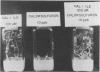
The sulfonylurea herbicide chlorsulfuron blocks the biosynthesis of the amino acids valine and isoleucine in plants. Addition of these two amino acids to excised pea root (Pisum sativum L. var Alaska) cultures incubated in the presence of chlorsulfuron completely alleviates herbicide-induced growth inhibition. The site of action of chlorsulfuron is the enzyme acetolactate synthase which catalyzes the first step in the biosynthesis of valine and isoleucine. This enzyme is extremely sensitive to inhibition by chlorsulfuron having I50 values ranging from 18 to 36 nanomolar. In addition, acetolactate synthase from a wide variety of tolerant and sensitive plants species is highly sensitive to inhibition by chlorsulfuron.
Full text
PDF
Images in this article
Selected References
These references are in PubMed. This may not be the complete list of references from this article.
- Chaleff R. S., Ray T. B. Herbicide-resistant mutants from tobacco cell cultures. Science. 1984 Mar 16;223(4641):1148–1151. doi: 10.1126/science.223.4641.1148. [DOI] [PubMed] [Google Scholar]
- LOWRY O. H., ROSEBROUGH N. J., FARR A. L., RANDALL R. J. Protein measurement with the Folin phenol reagent. J Biol Chem. 1951 Nov;193(1):265–275. [PubMed] [Google Scholar]
- Van't Hof J. Control of cell progression through the mitotic cycle by carbohydrate provision. I. Regulation of cell division in excised plant tissue. J Cell Biol. 1968 Jun;37(3):773–780. doi: 10.1083/jcb.37.3.773. [DOI] [PMC free article] [PubMed] [Google Scholar]